Wow, we made it to 30.
I did not make it on the Forbes 30 under 30, which historically means I have a higher chance of not going to prison, so that’s nice.
Every year around my birthday, I try to write down what life seems to be teaching (or trying to teach) me. I also have a habit of being somewhere cool: 27 Things I Learned Turning 27 from Tel Aviv, 28 Lessons for 28 Years from Cartagena, 29 Rules for 29 Years from Hermosa Beach.
This year I’m finishing the writing/editing for this from a cafe in New Orleans, LA.
This year’s list is an amalgamation from my time running Cascade Consulting Group, random conversations with friends, books, youtube rabbit holes, podcasts, tweets, notes, etc.
Welp, without further ado, here’s my field notes from the year:
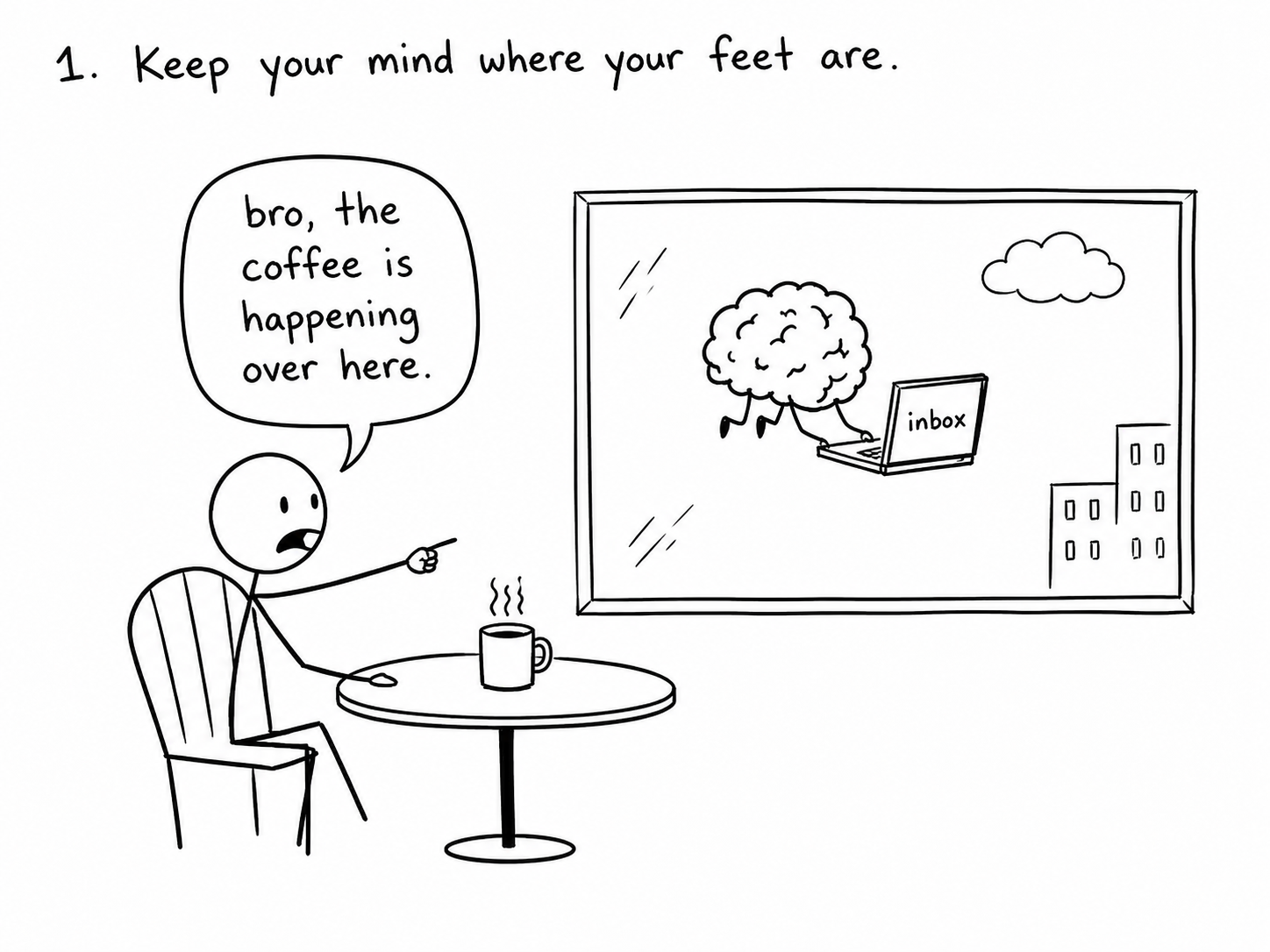
Enlightenment probably isn’t disappearing to a cave and levitating over a gluten-free granola bowl. It’s getting 5-10 moments a day where the brain is actually in the same room as the body.
Drinking the coffee and tasting it. Walking outside and noticing the light. Talking to a friend without mentally checking the inbox like a psychopath.
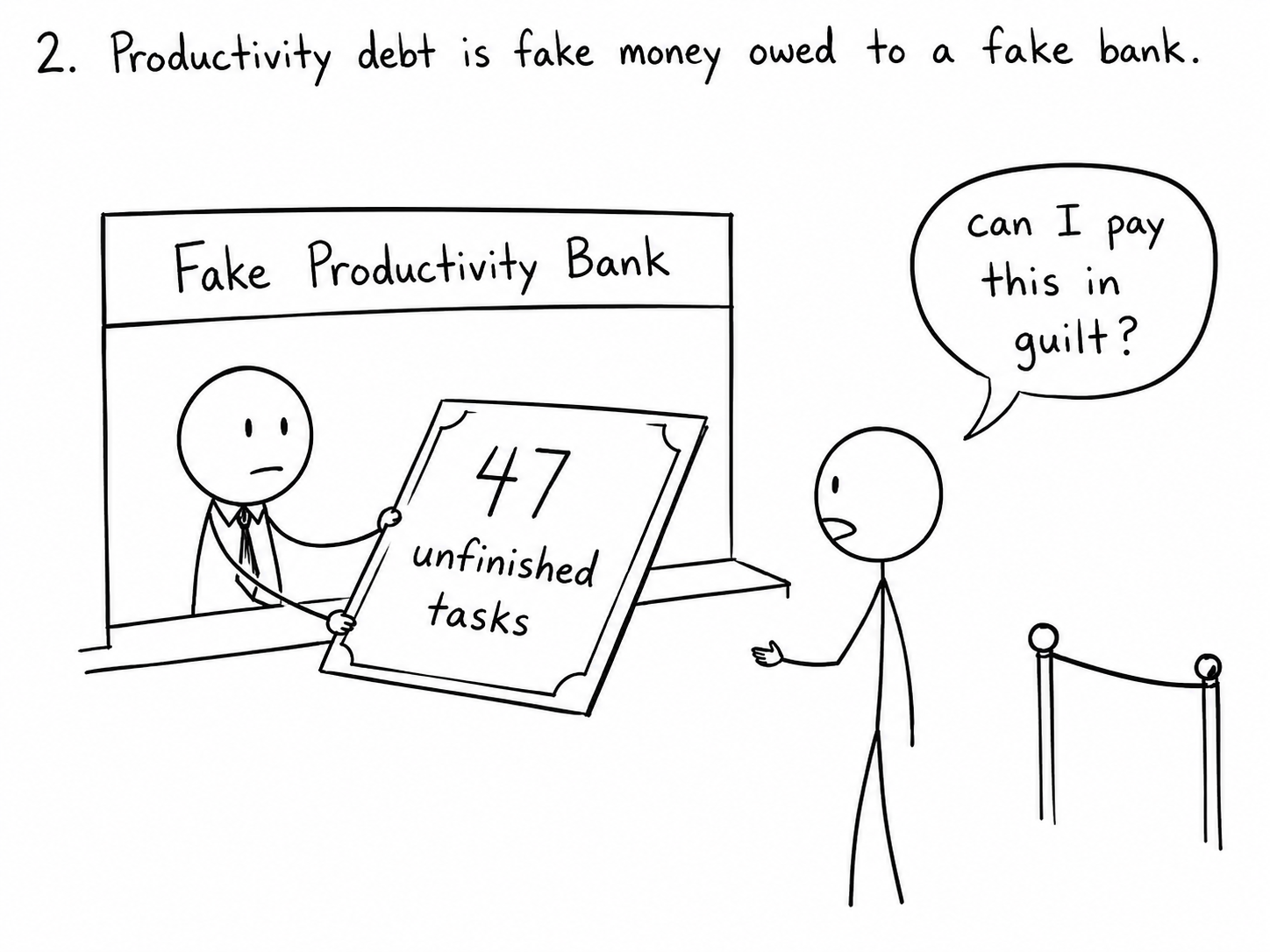
Some mornings I feel like adulthood mailed an invoice overnight. But we are all gunna die with something on the to-do list.
Waiting to feel “caught up” before enjoying life is a great way to become an 83-year-old asking if a sunset was earned.
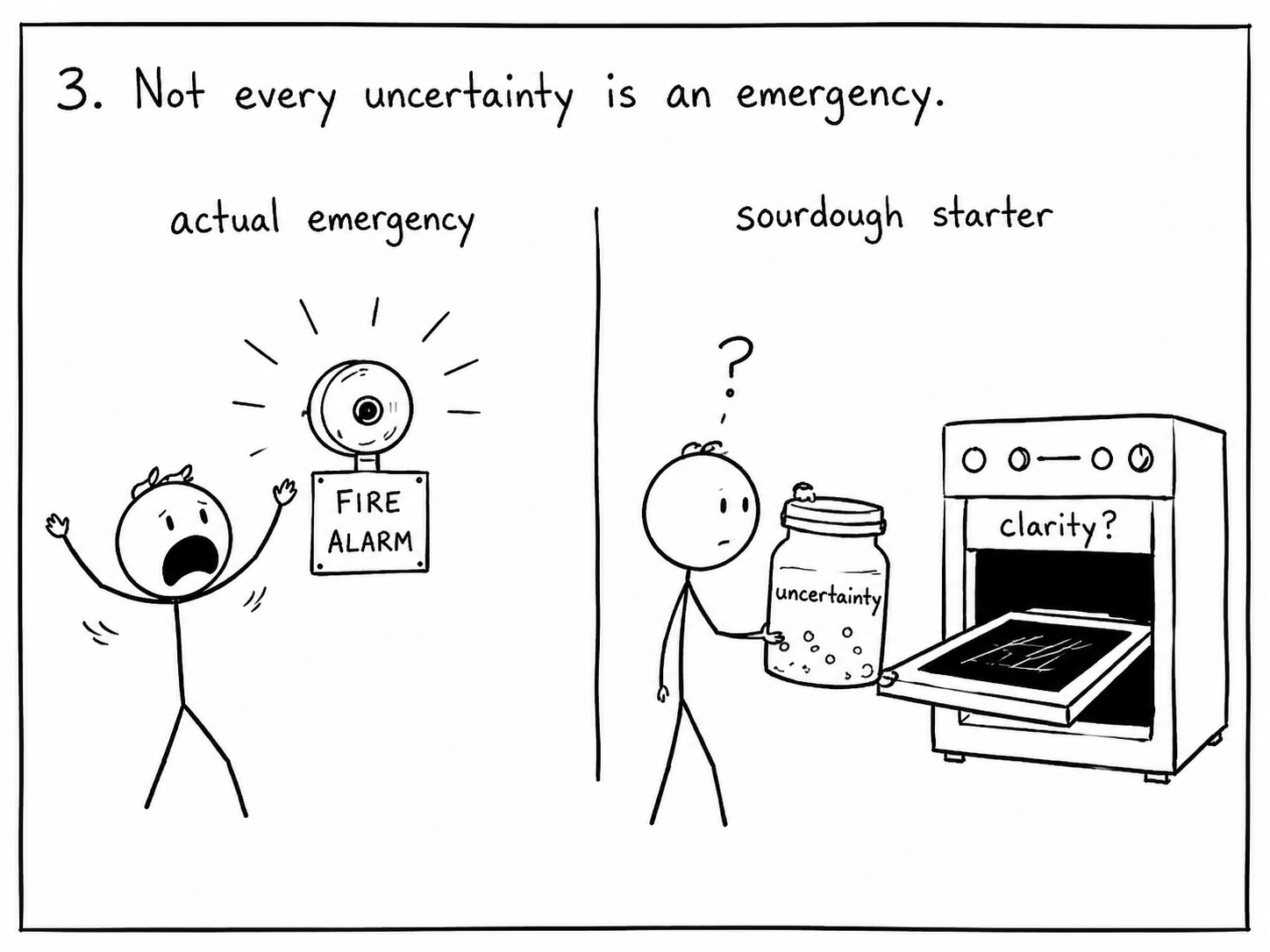
Negative capability is the ability to sit with uncertainty instead of forcing cheap answers. Annoying, because clarity should obviously arrive Amazon Prime style. But some answers need crockpot time.
Some confusion is a fire alarm. Some confusion is sourdough starter. Open the oven every 30 seconds to see if life has become clear yet, and the bread collapses.
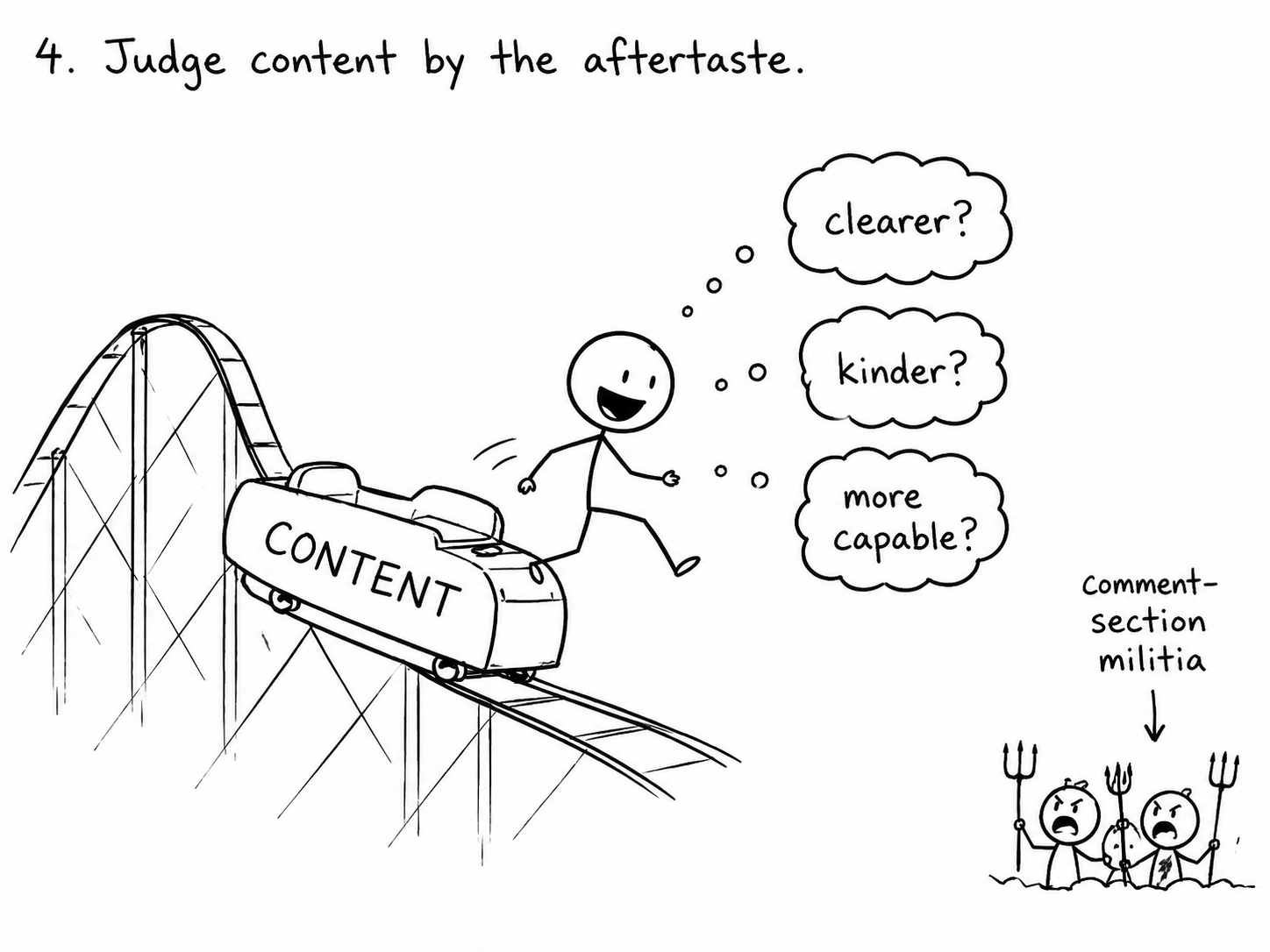
A roller coaster cannot be judged while upside down. Same with content.
After the ride ends, ask: did that make things clearer, kinder, more capable? Or tense, cynical, and weirdly prepared to join a comment-section militia?
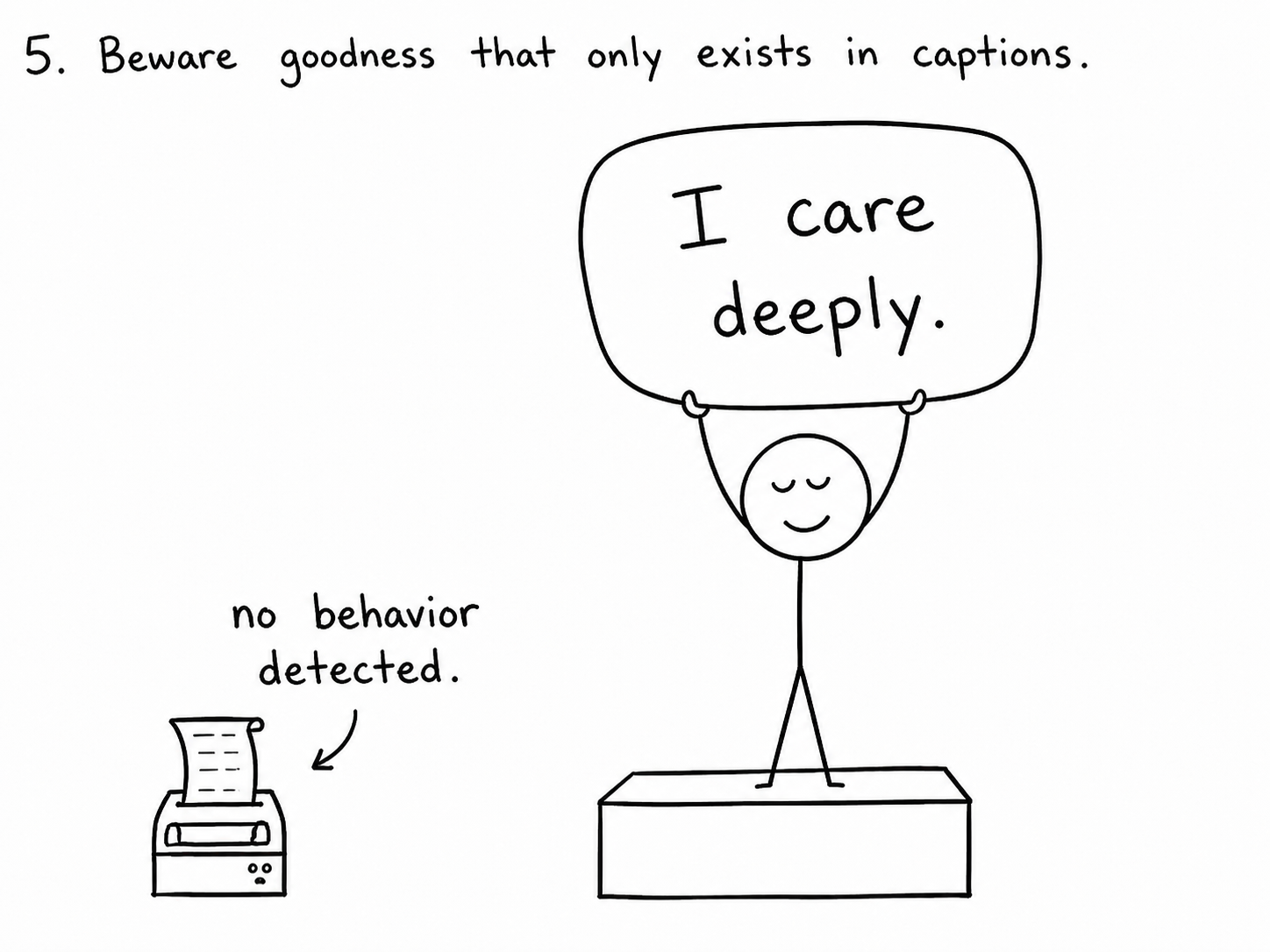
Social media makes it easy to look virtuous without being useful. Bios, slogans, and perfectly crafted concern are cheap.
Behavior still costs something. Trust less caption. Trust more receipts.
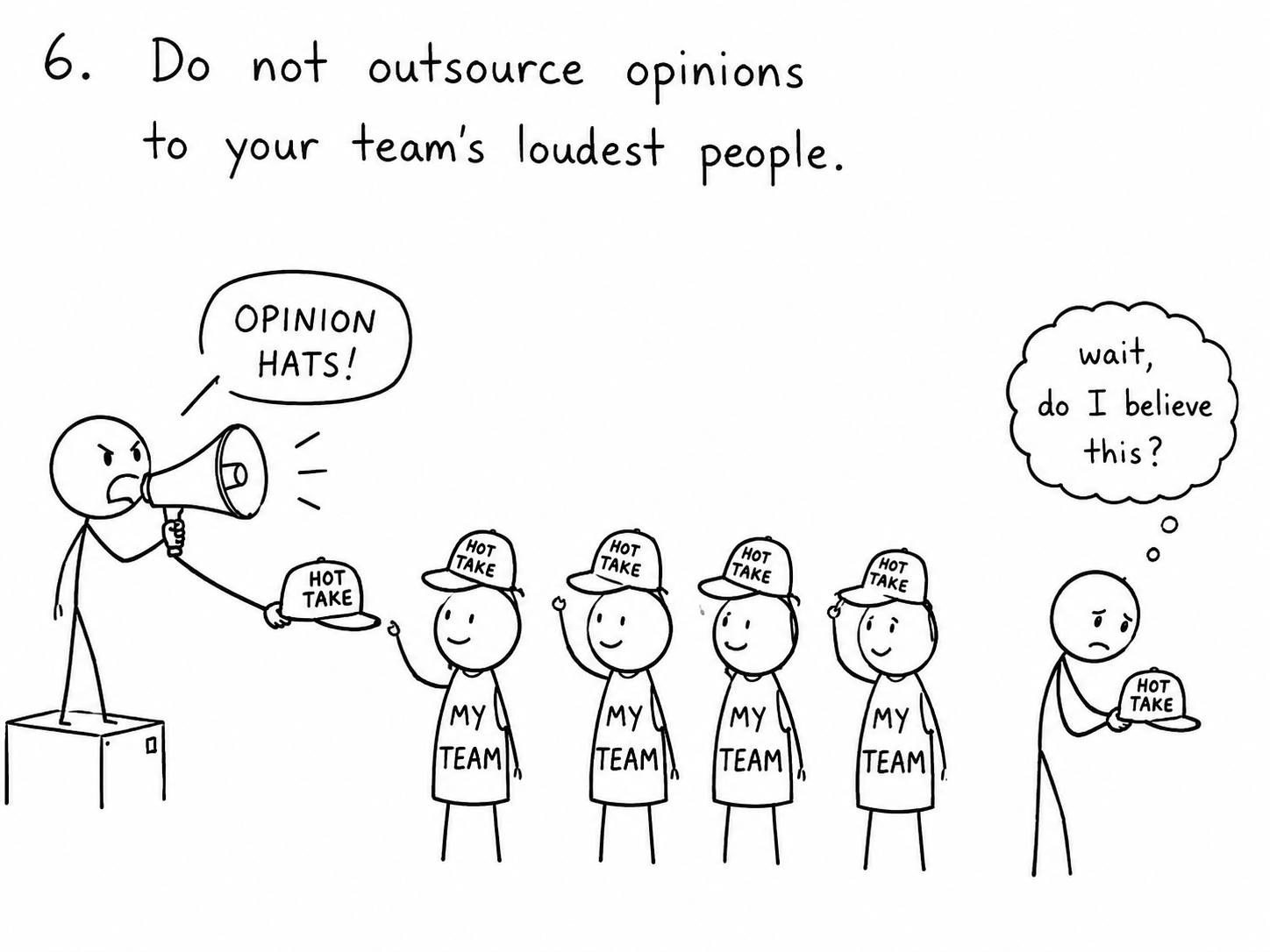
Most of us don’t have time to research every issue we’re supposed to care about, so we rent opinions from people who sound confident.
Then we march around like intellectual NPCs yelling someone else’s thoughts. Better to have fewer takes and more actual thinking.
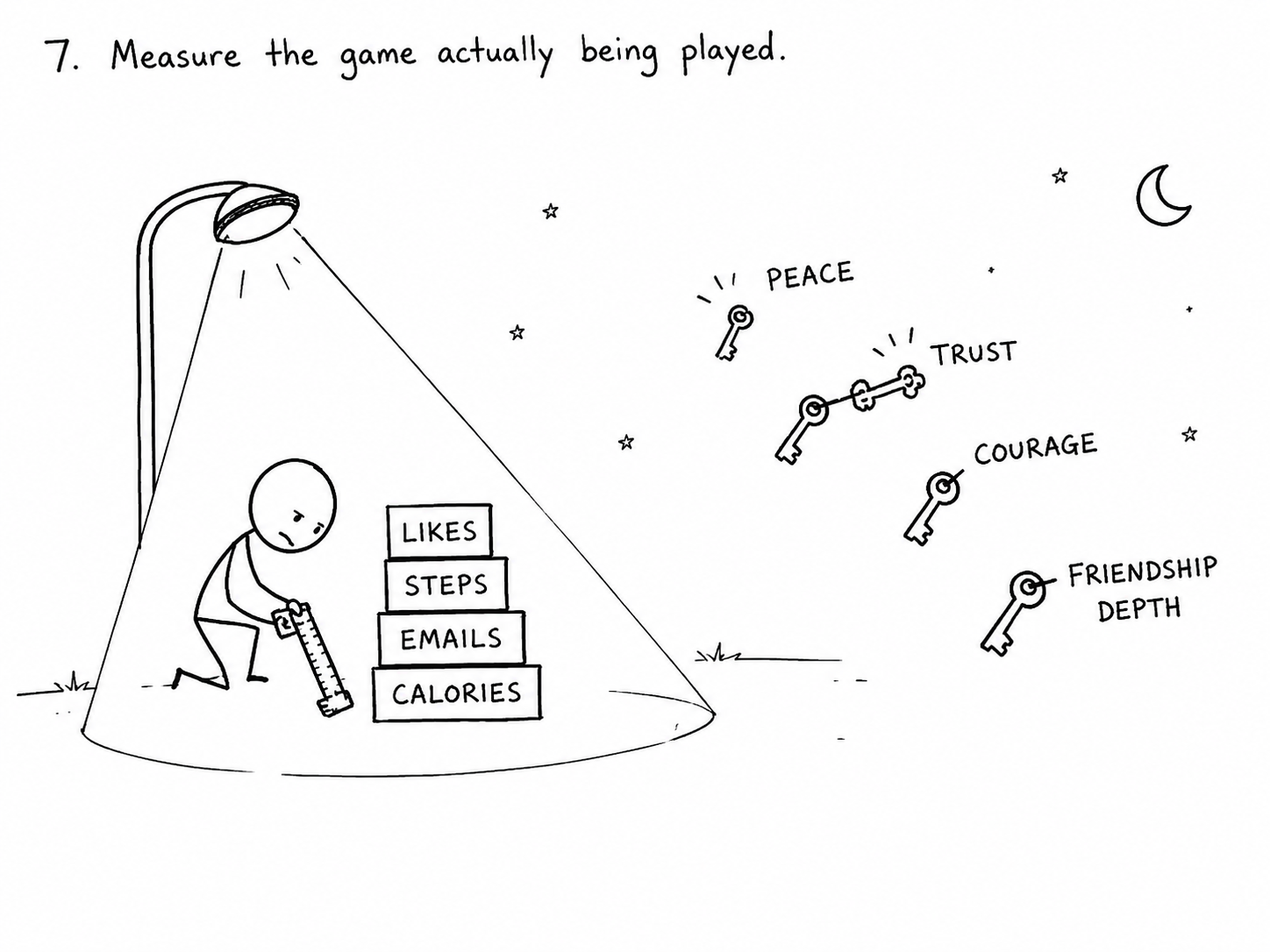
The Streetlight Effect comes from the story of a man looking for his keys under a streetlight because the light is better there, even though he lost them somewhere else. This happens every time visible metrics get optimized while the actual problem sits in the dark.
Hours worked, likes, followers, calories, steps, unread emails – easy to count.
Trust, peace, courage, creativity, attraction, friendship depth – harder to count.
The scoreboard only matters if it’s measuring the right game.
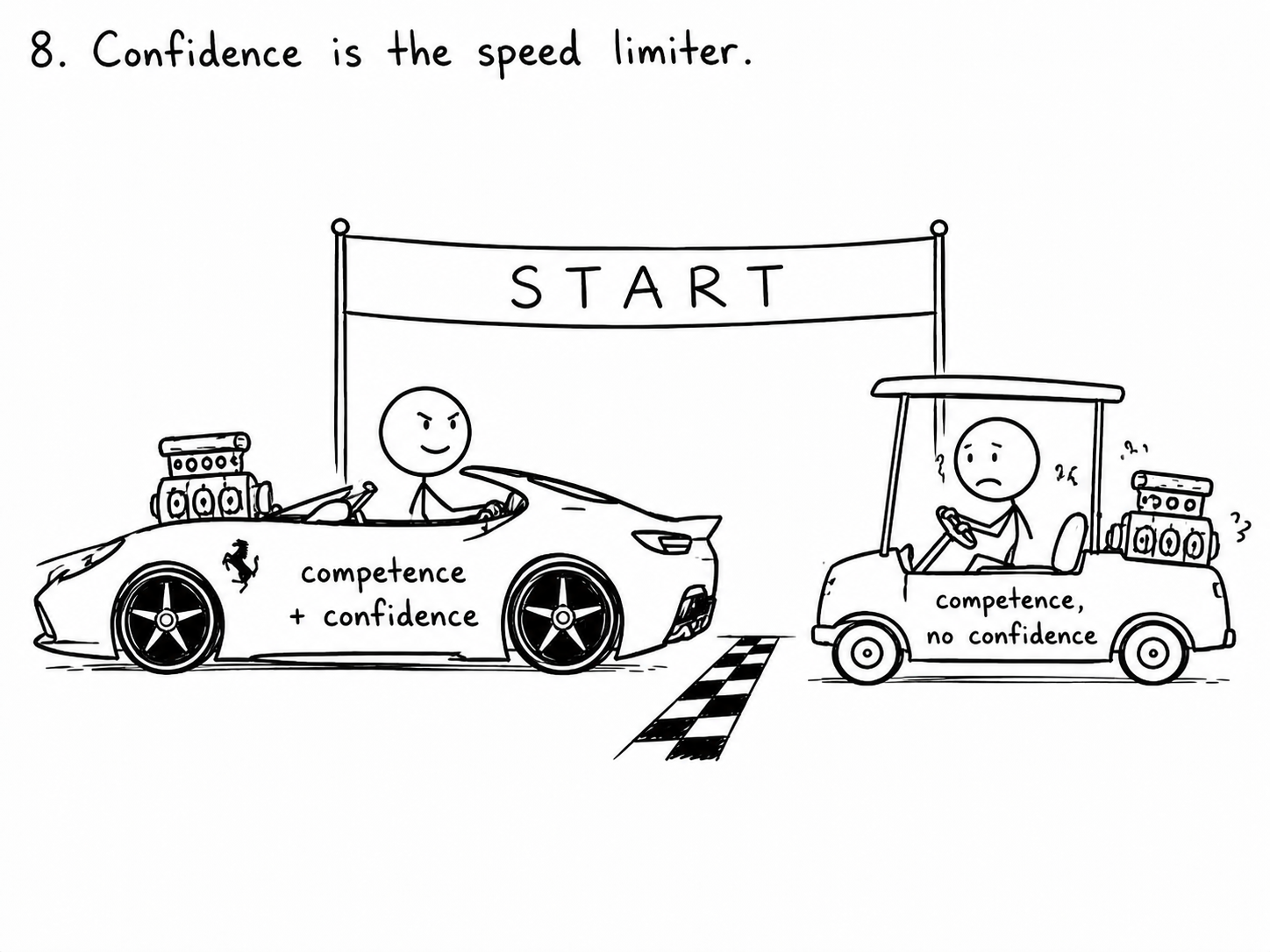
There is probably someone with half the talent and 10x the self-belief making 5x the money.
Horrifying? Yes. Useful? Also yes.
Competence is the engine. Confidence decides whether the engine is in a Ferrari or a golf cart.
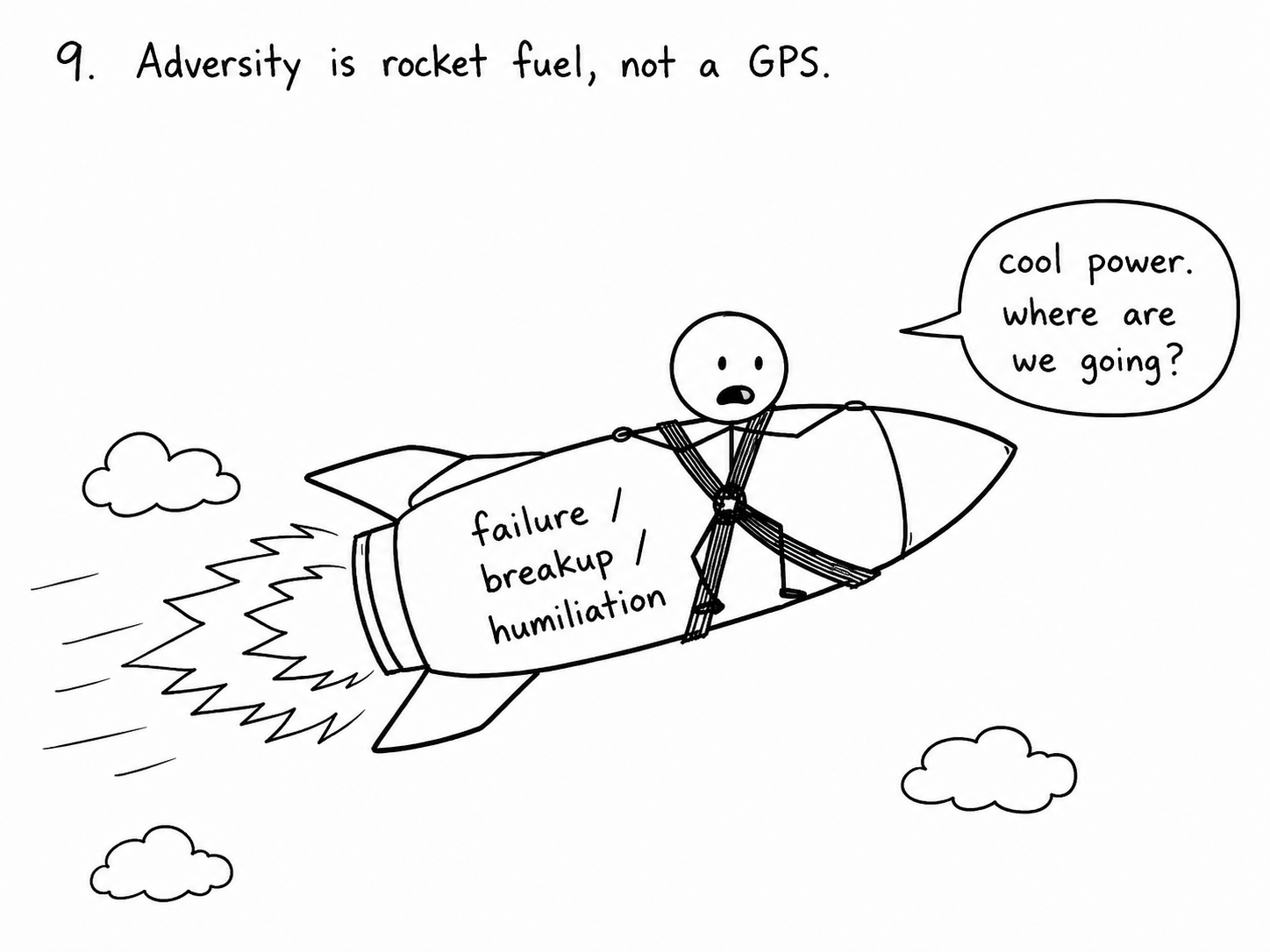
Pain can launch a person. It cannot steer them.
After a failure, breakup, rejection, or humiliation, there’s a window where the emotion can power real change. Wait too long and it hardens into a museum exhibit called “what happened to me.”
Rocket fuel is useful. It is also how things explode.
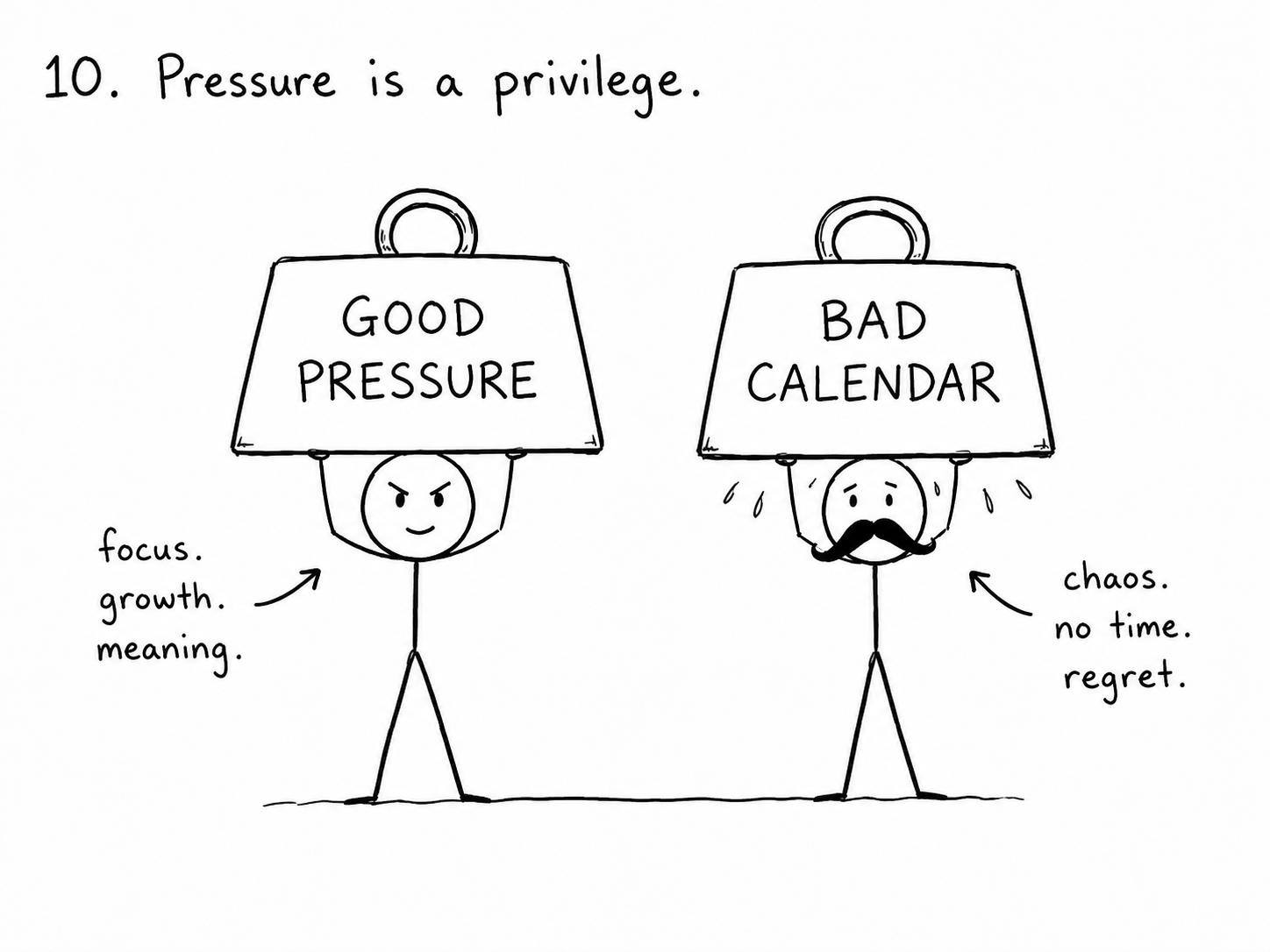
Pressure makes the eyes pop open. It makes the room quieter. It turns background noise into one clear signal.
Not all pressure is noble; sometimes it’s just a bad calendar and poor boundaries wearing a fake mustache. But the right kind of pressure is a gift. It makes us feel alive.
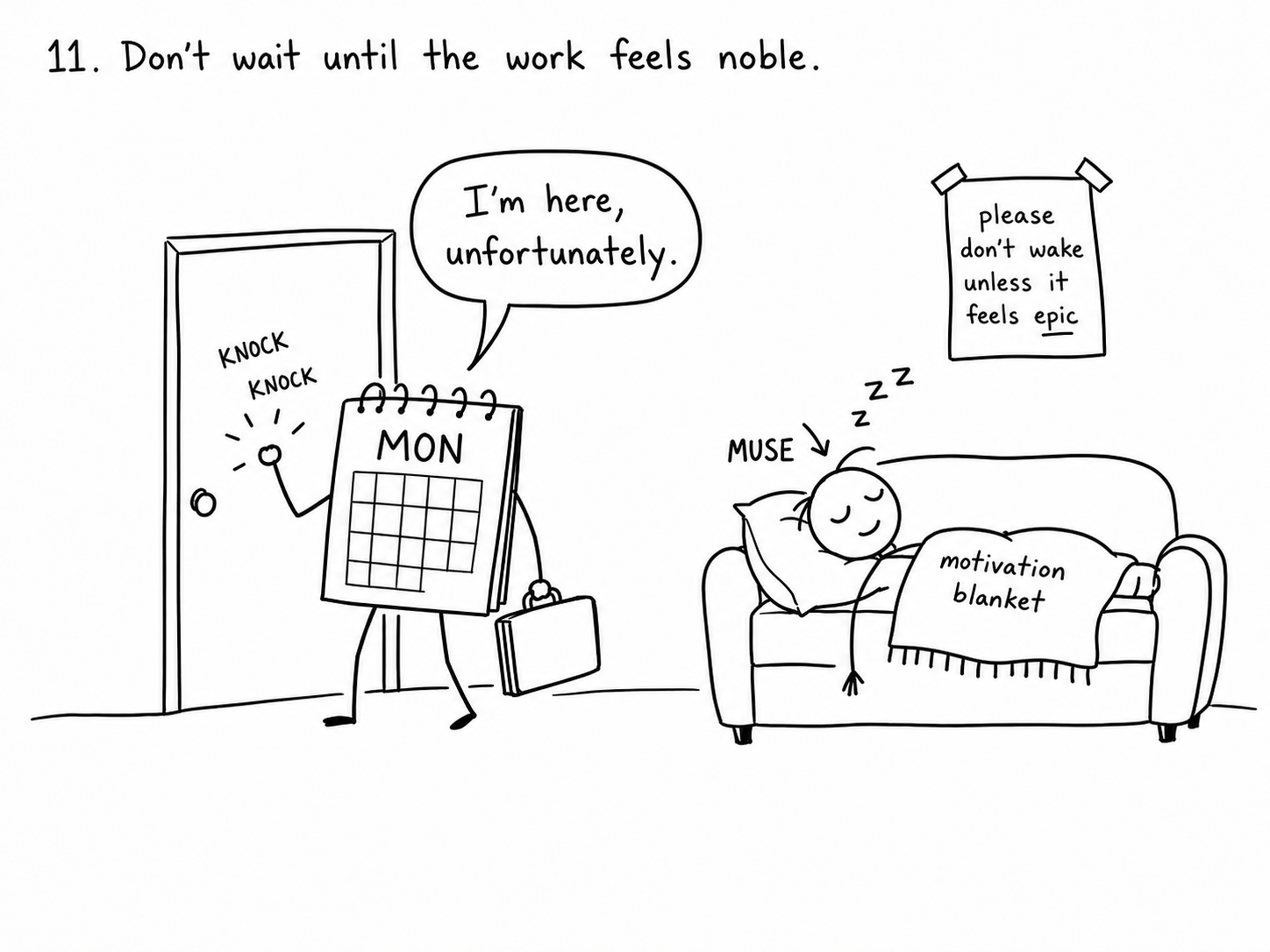
Some good work feels like calling. Some good work feels like opening a laptop while mildly annoyed.
The muse is unreliable. The calendar is less romantic, but it shows up.
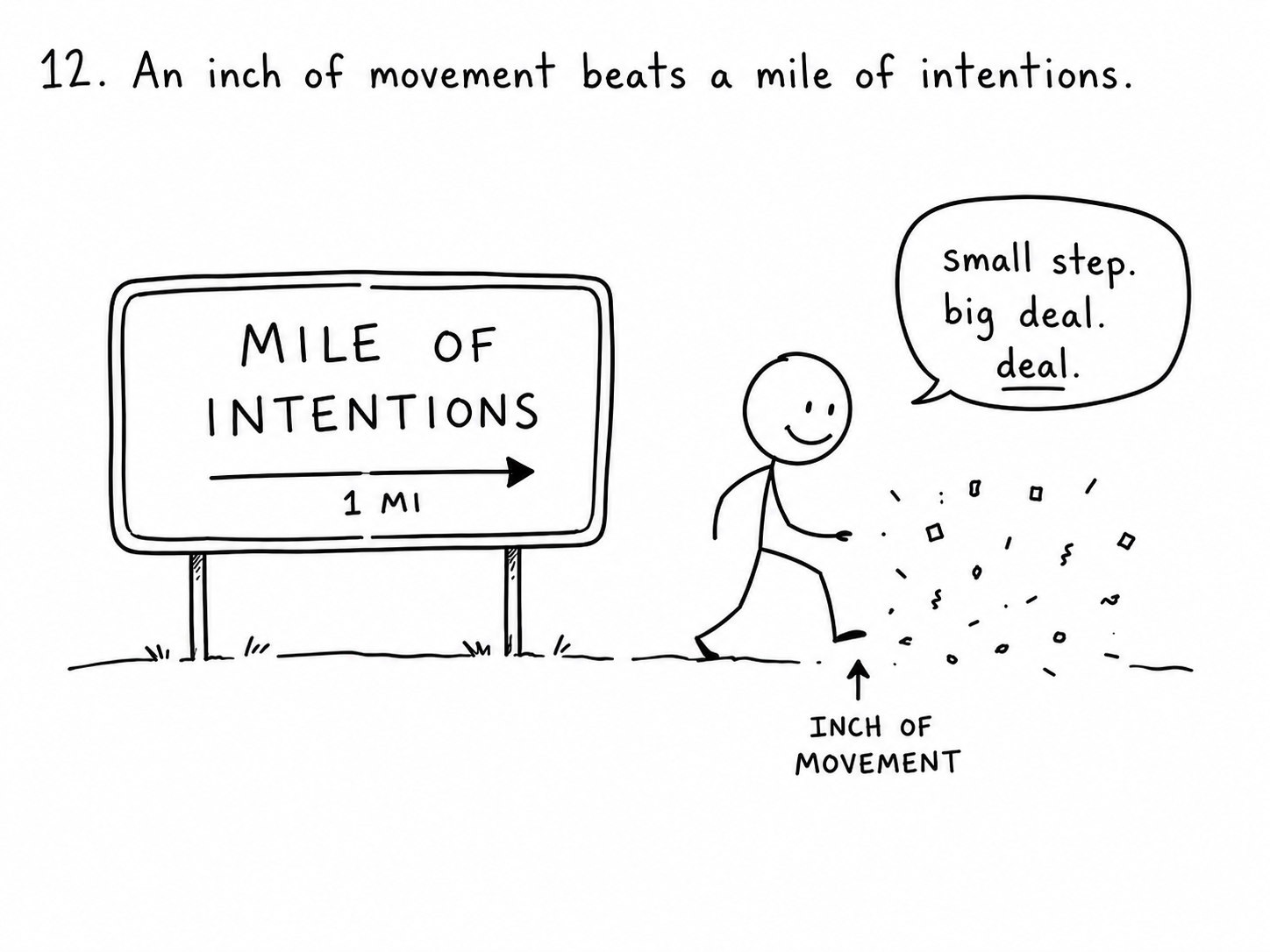
The fantasy version of discipline is dramatic. New identity. New morning routine. New notebook. New person by Thursday.
The real version is usually miniscule. Send the text. Open the doc. Walk around the block. Make the first call. Do the tiny thing that makes the next tiny thing obvious.
Momentum is not a TED Talk. It is a shopping cart with one good wheel. Push anyway.
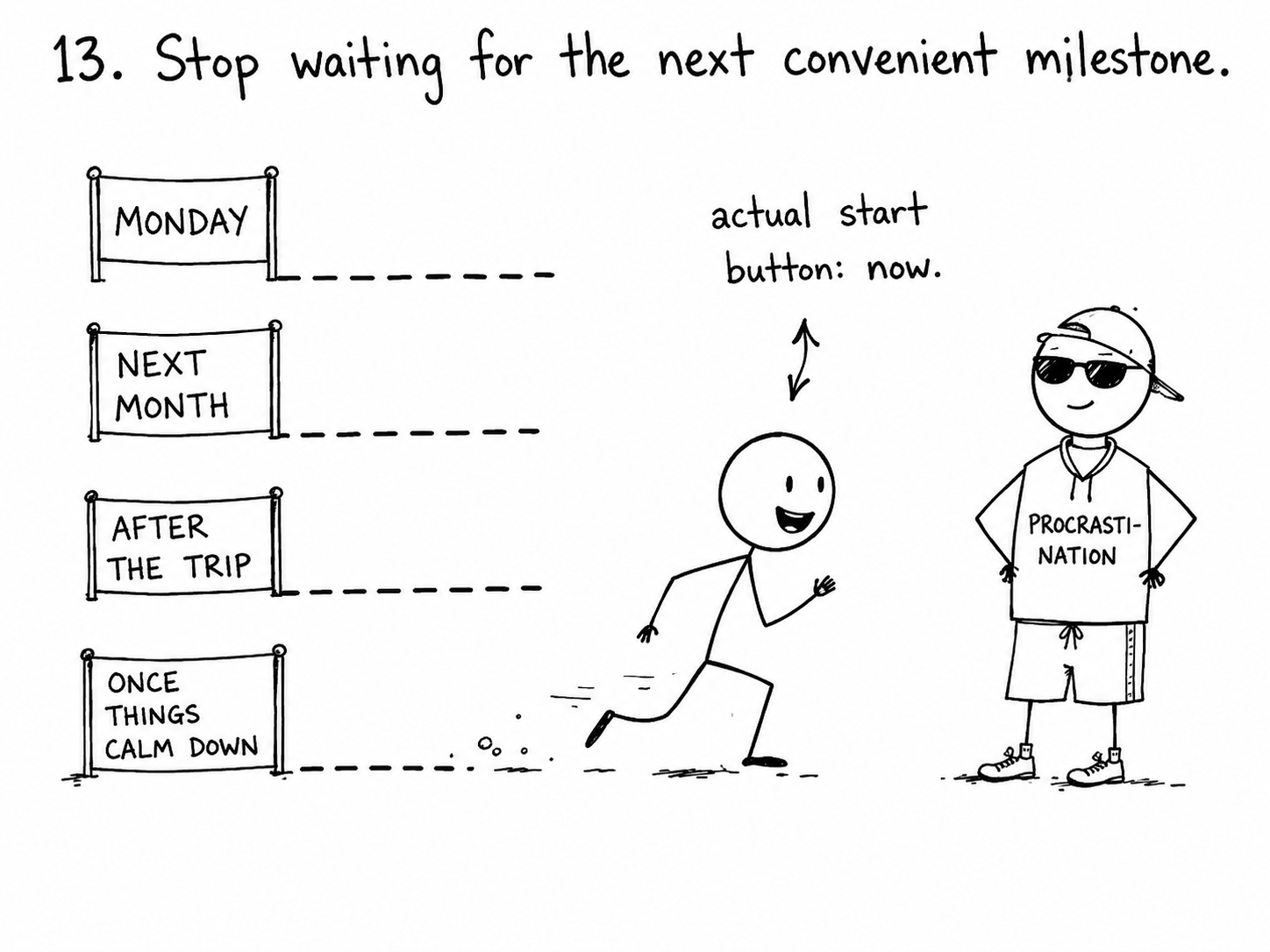
Monday. Next month. After the trip. Once things calm down. After the birthday.
The clean starting line is usually just procrastination wearing athleisure. The work starts when the excuse ends.
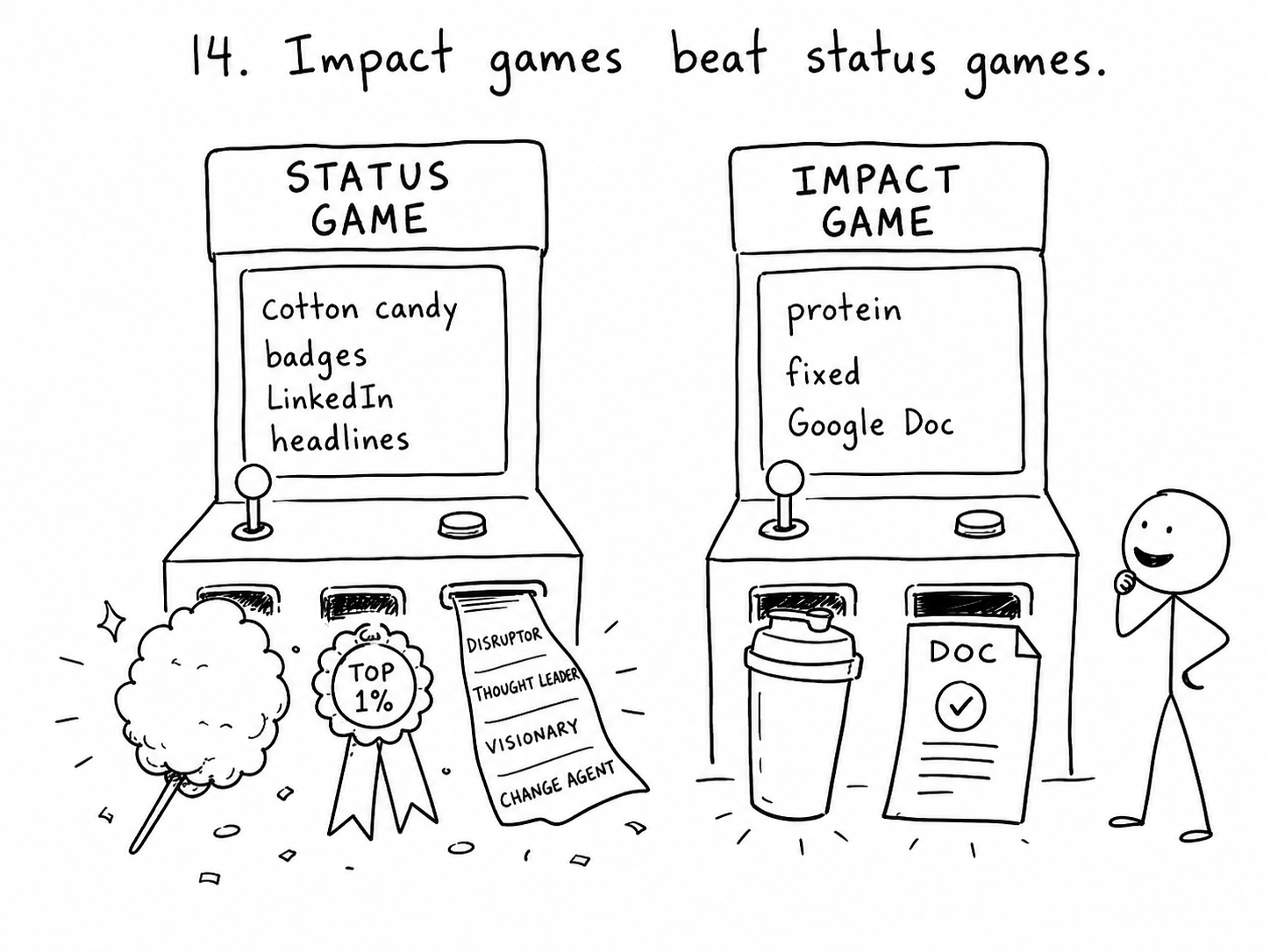
Status games are seats at tables, recognition, being seen as important. Impact games are making the thing better.
One is protein. The other is cotton candy with a LinkedIn headline.
Being included in the room can feel important. But sometimes the actual output is a Google Doc and mild resentment. Better question: did anything improve because of the time spent there?
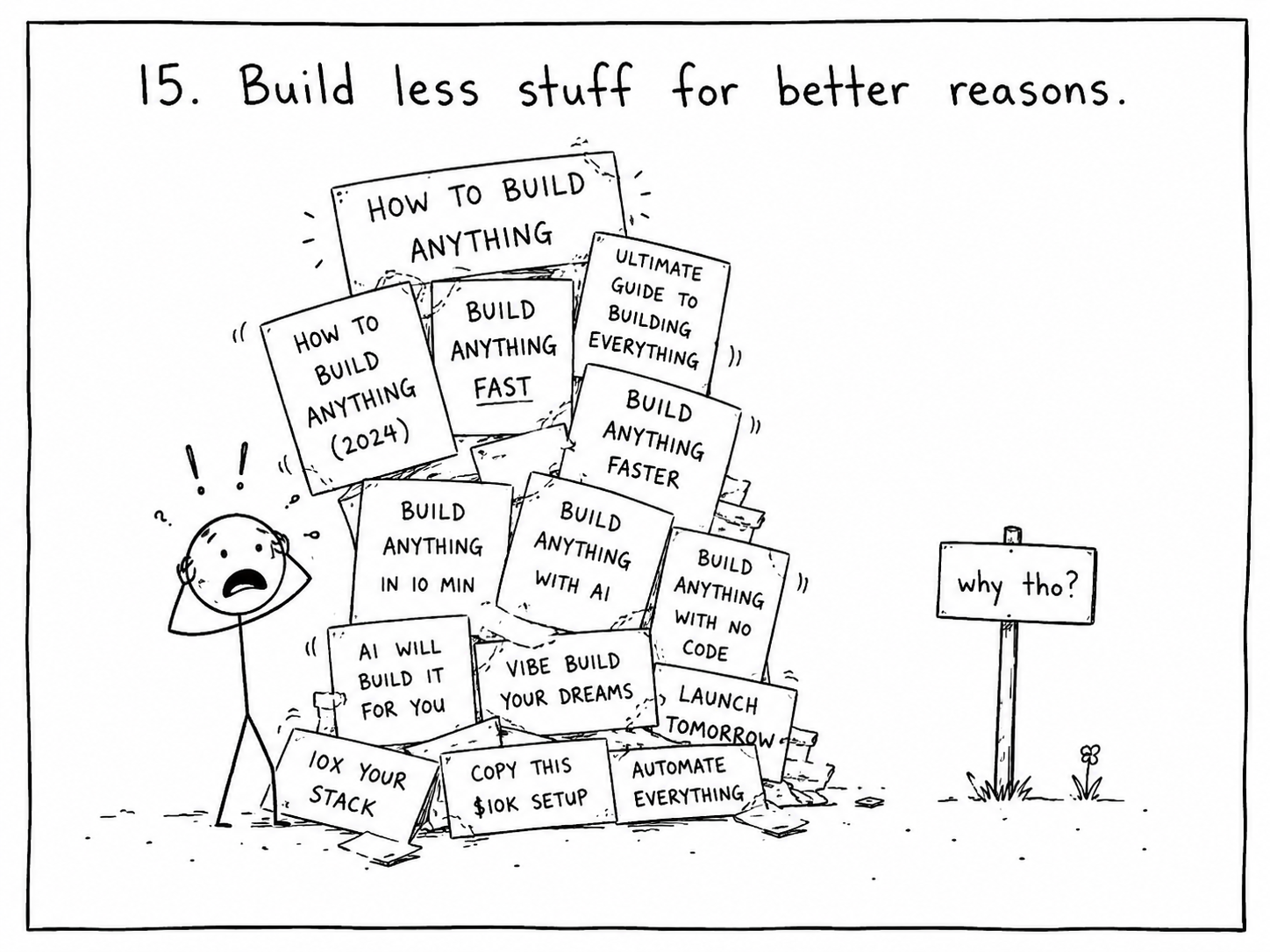
It has never been easier to figure out how to build something. The internet can teach the skill. AI can write the first draft. YouTube can show the process. Some guy in a Patagonia vest will sell the course before you finish asking the question.
The harder part now is not “how do I build this?”
It is “why am I building this?” and “is this worth becoming slightly obsessed with?”
Access is cheap. Attention is expensive. Choose the build carefully.
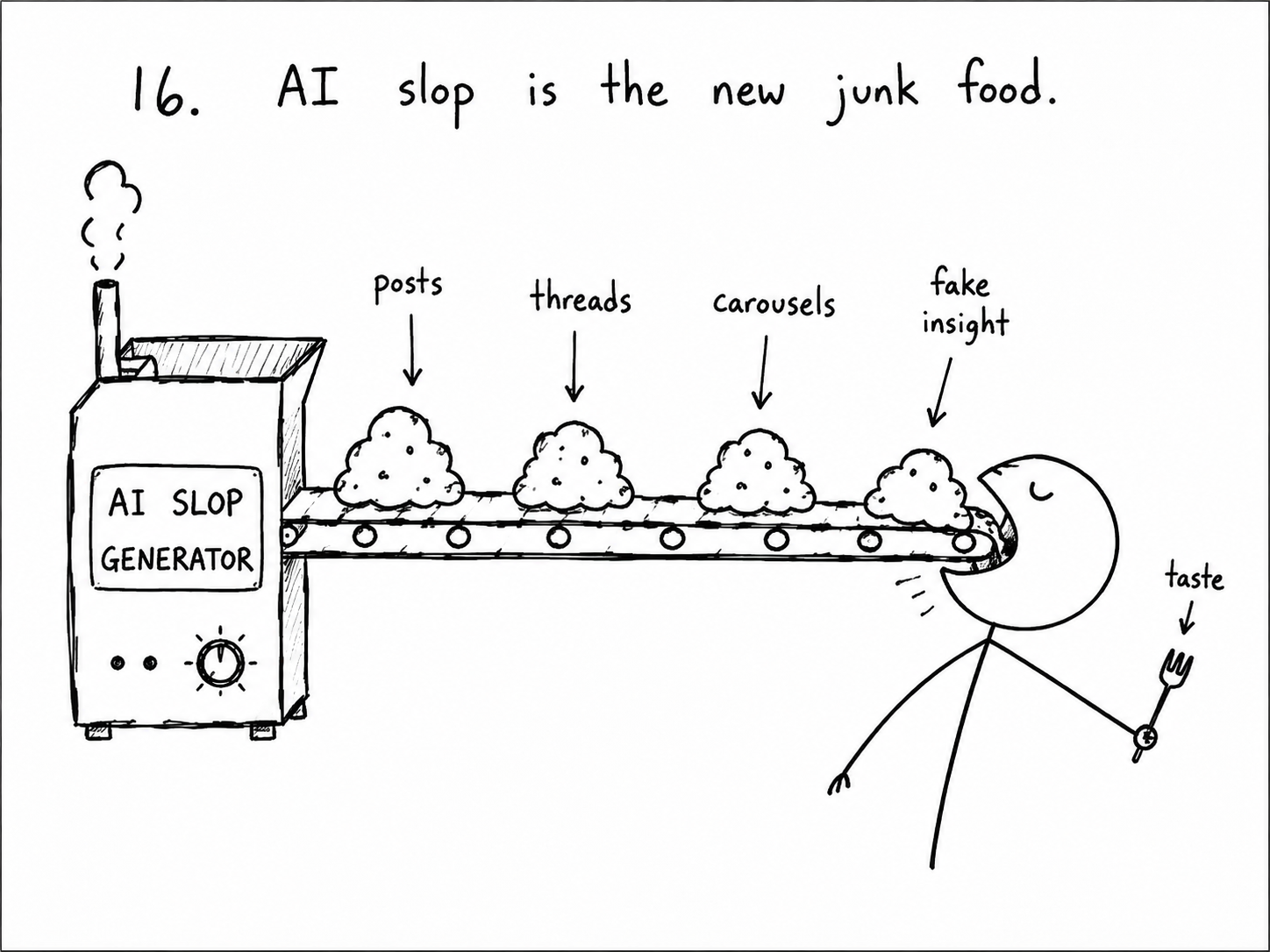
If the last decade felt like too much content, the next one may feel like being waterboarded by LinkedIn carousels made by robots with ring lights.
More words. More videos. More posts. More fake insight wearing a blazer. Infinite content, limited nervous system.
The new skill is not consuming more. It is developing a stronger gag reflex.
Taste is going to matter more than information. Discernment is the new productivity.
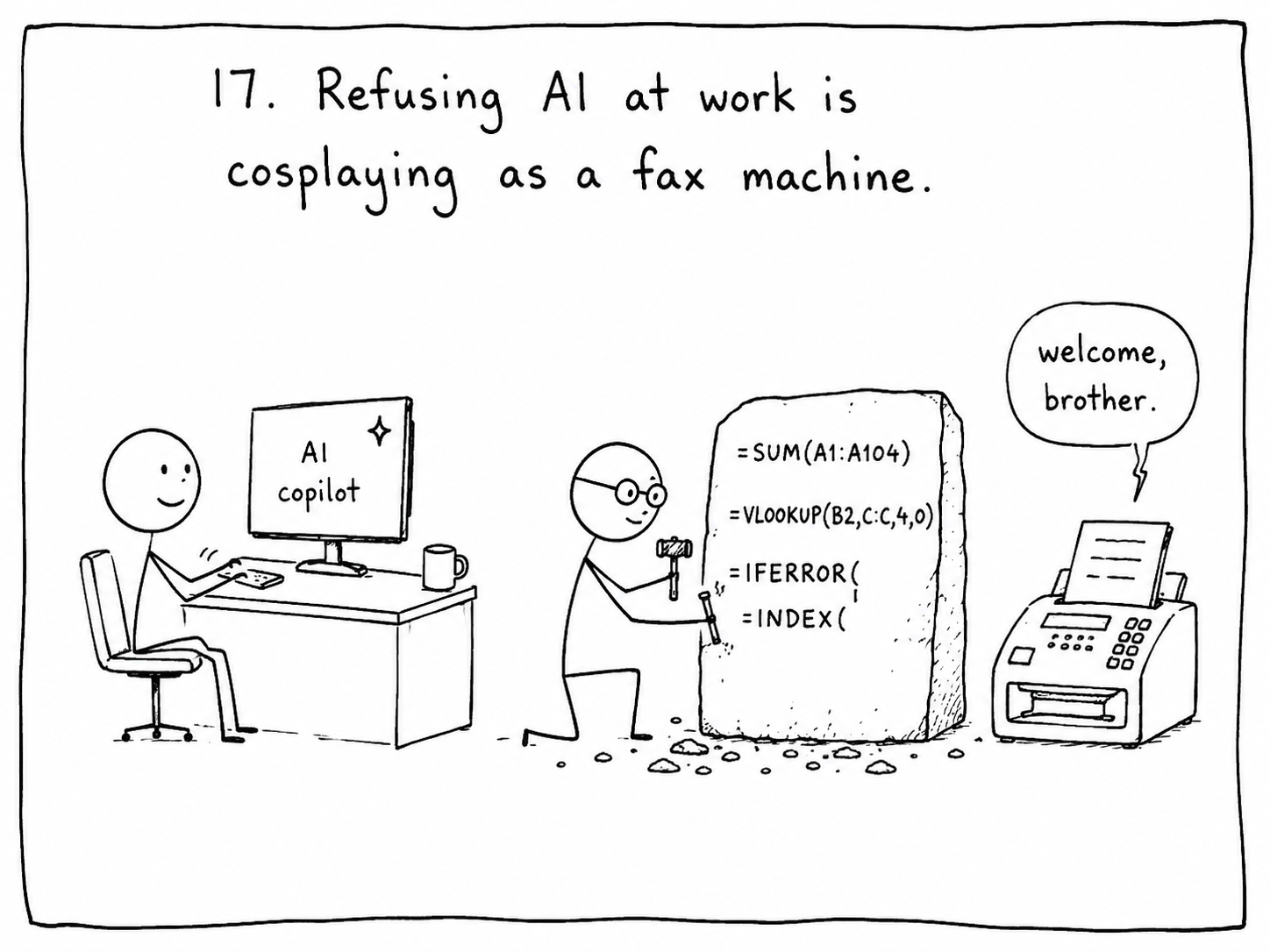
Telling someone to do a knowledge-work job without AI now feels like telling someone ten years ago to do manual data entry instead of using formulas in Excel.
Could you do it? Sure. You could also churn butter, send a raven, and print directions from MapQuest.
The point is not to worship the tool. The point is to stop pretending leverage is cheating.
Use the machine. Keep the judgment.
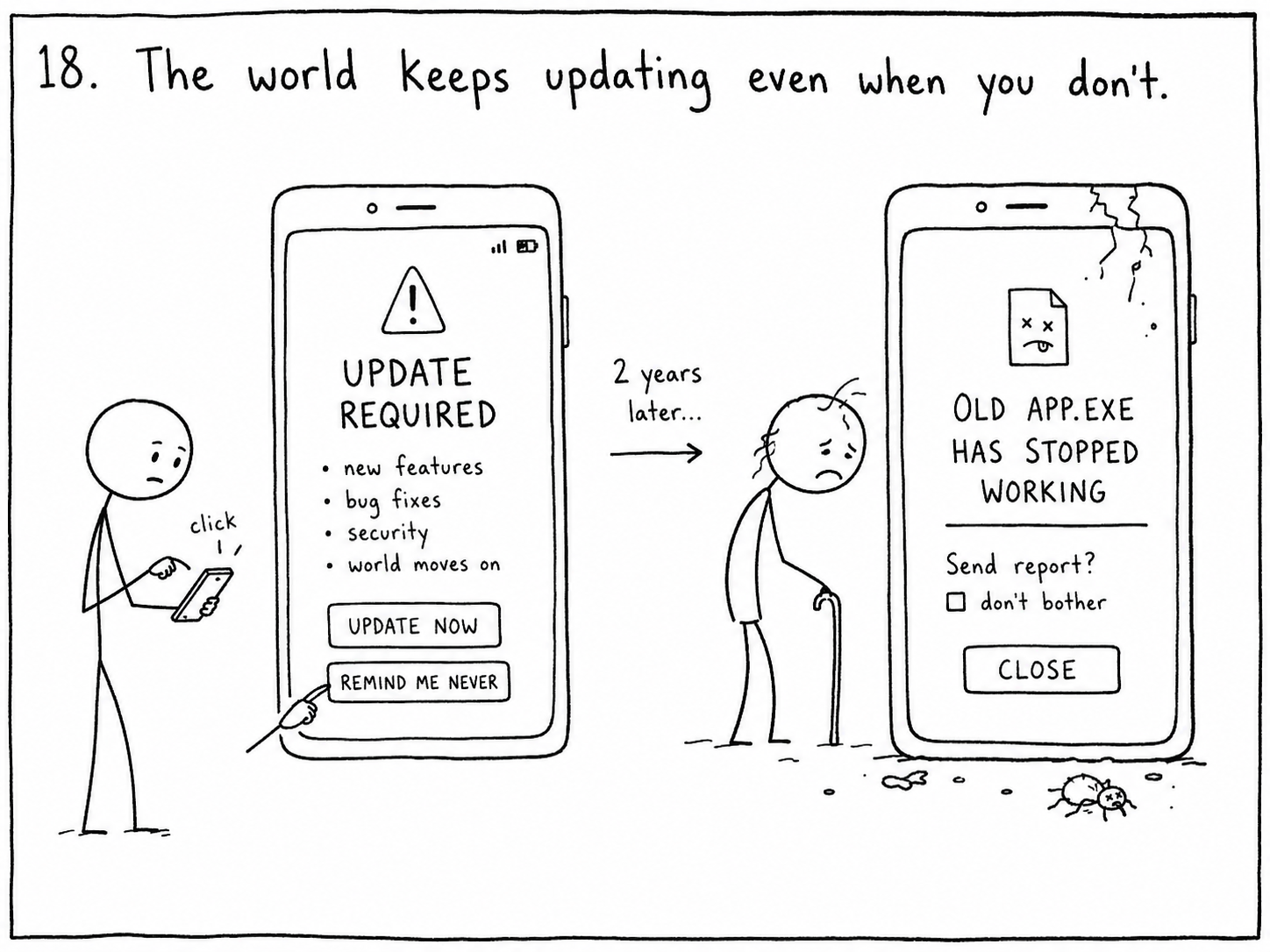
Nothing exists in a museum case. Skills, bodies, friendships, habits, wardrobes, businesses, and worldviews all live inside a changing operating system.
Refuse updates long enough and eventually you become the app that crashes when someone opens it.
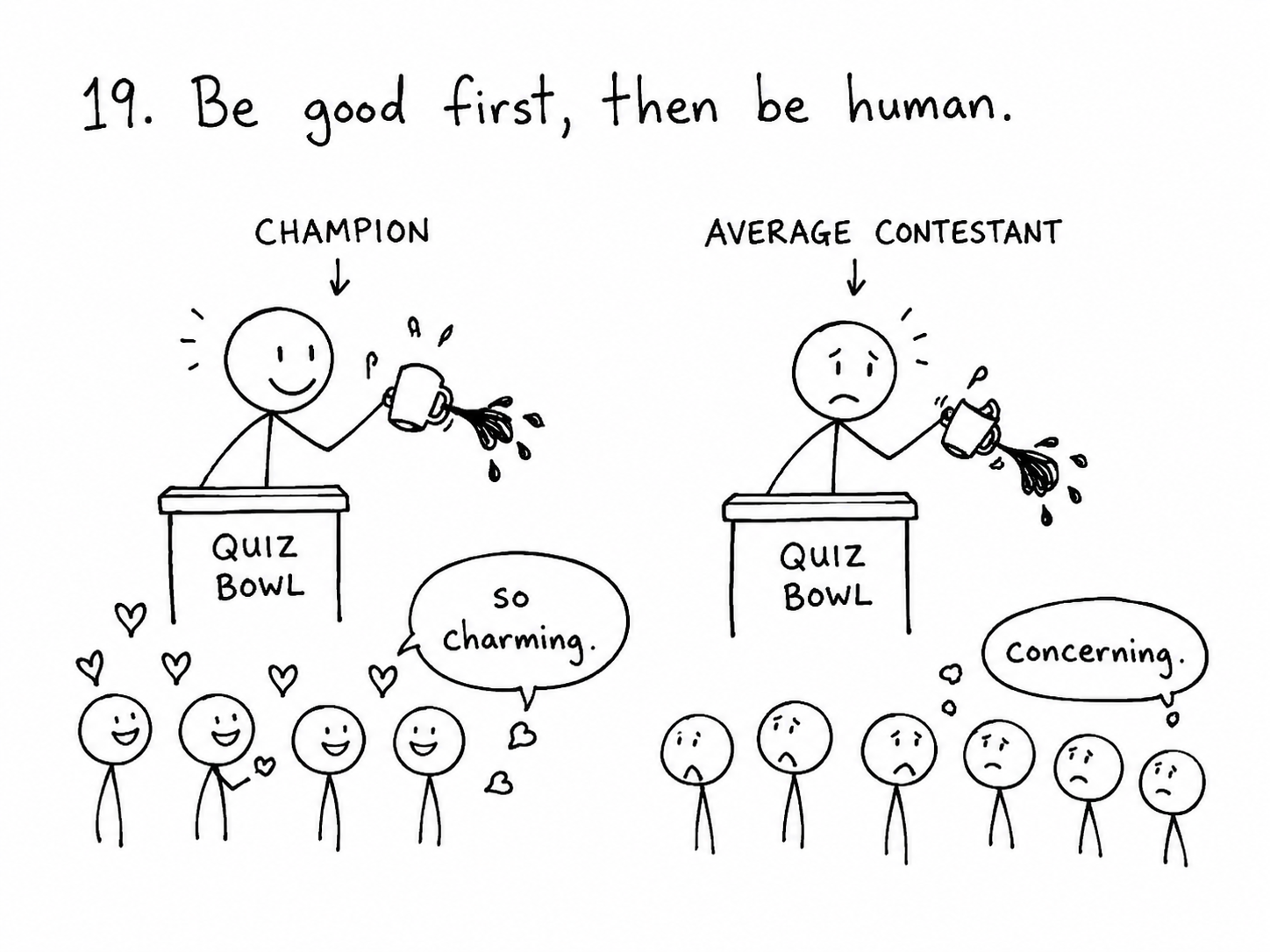
The Pratfall Effect comes from an experiment where a strong quiz-bowl candidate who spilled coffee became more likable, while an average candidate who spilled coffee became less likable. The lesson: competence turns small flaws into charm.
The goal is not marble statue. It’s to be a slightly scuffed passport. Competence gets people to listen. Imperfection lets them relax.
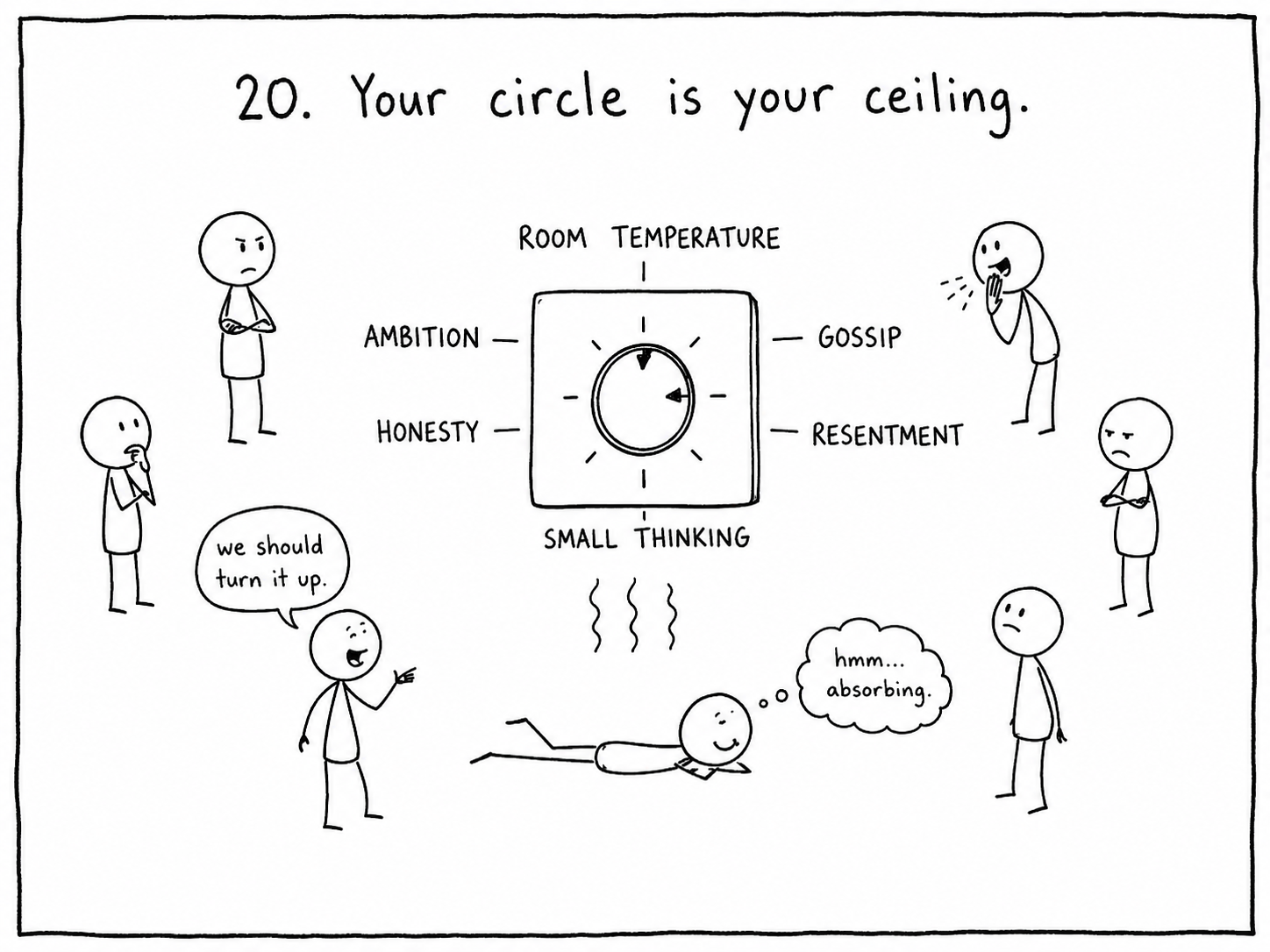
Every group has an invisible thermostat. Some rooms make ambition feel normal. Some rooms make honesty feel normal. Some rooms make gossip, resentment, and small thinking feel normal.
Eventually, the temperature gets into your bones. Choose rooms carefully.
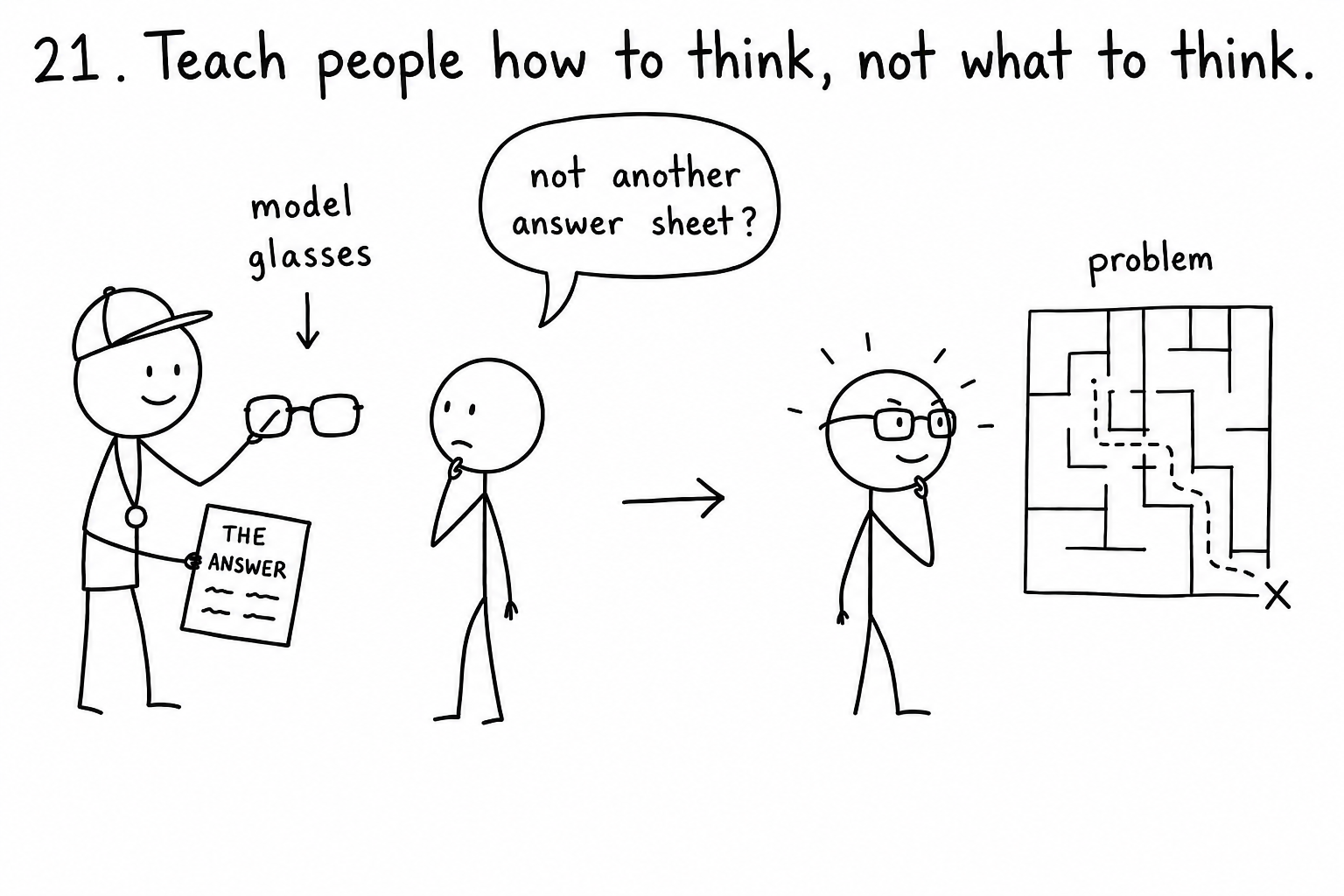
Clay Christensen once visited Intel to explain disruption to Andy Grove. Grove wanted the answer for Intel. Christensen gave him the model instead. Then Grove figured out the answer himself.
That is better coaching: don’t just hand someone the answer, teach them how to see.
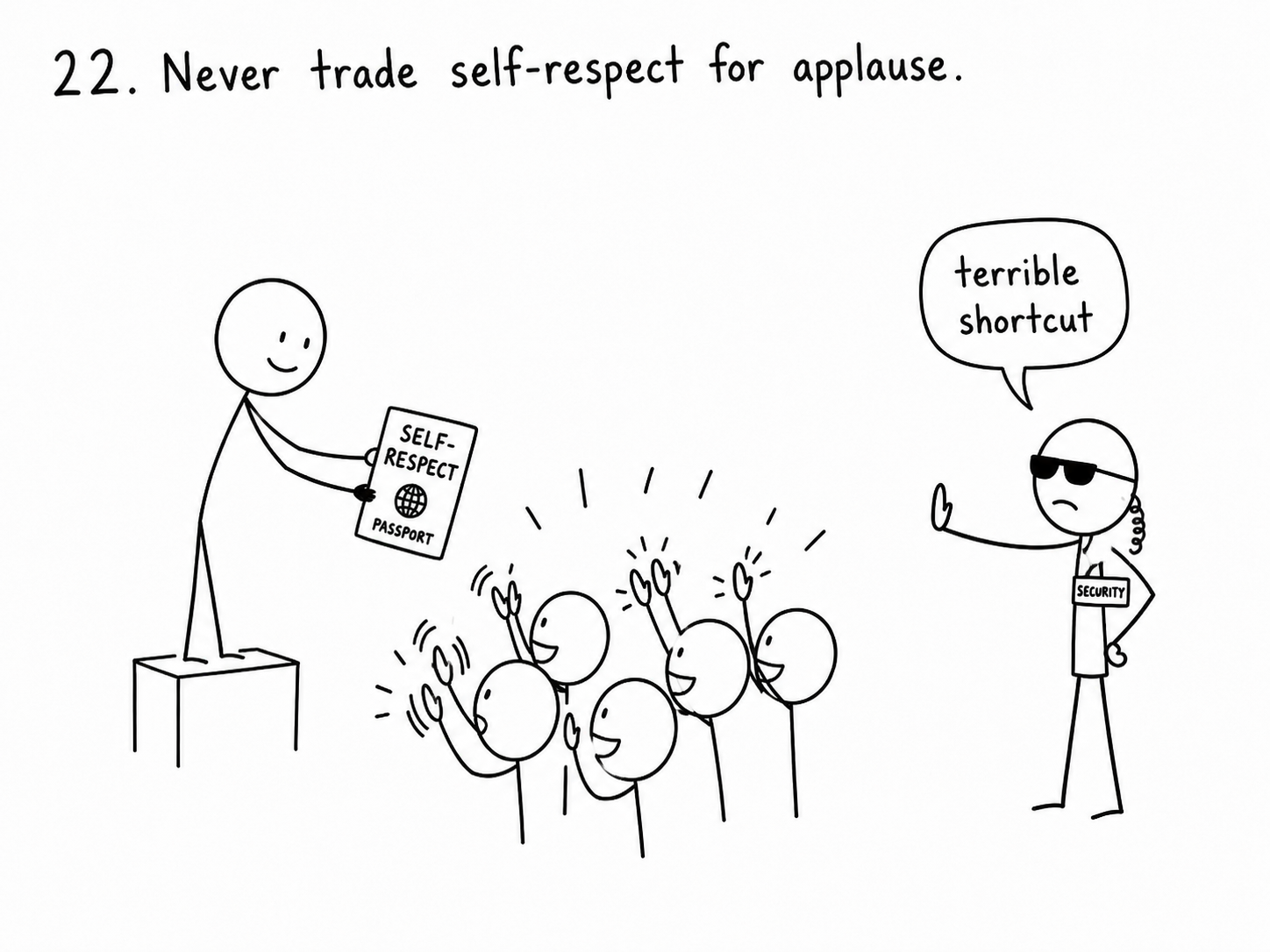
A person can be liked by everyone and still hate the version of themselves that earned it. That is a terrible trade.
Chasing validation to earn self-worth is like burning your passport to get through airport security faster. It might feel like a shortcut. But nobody is getting anywhere good.
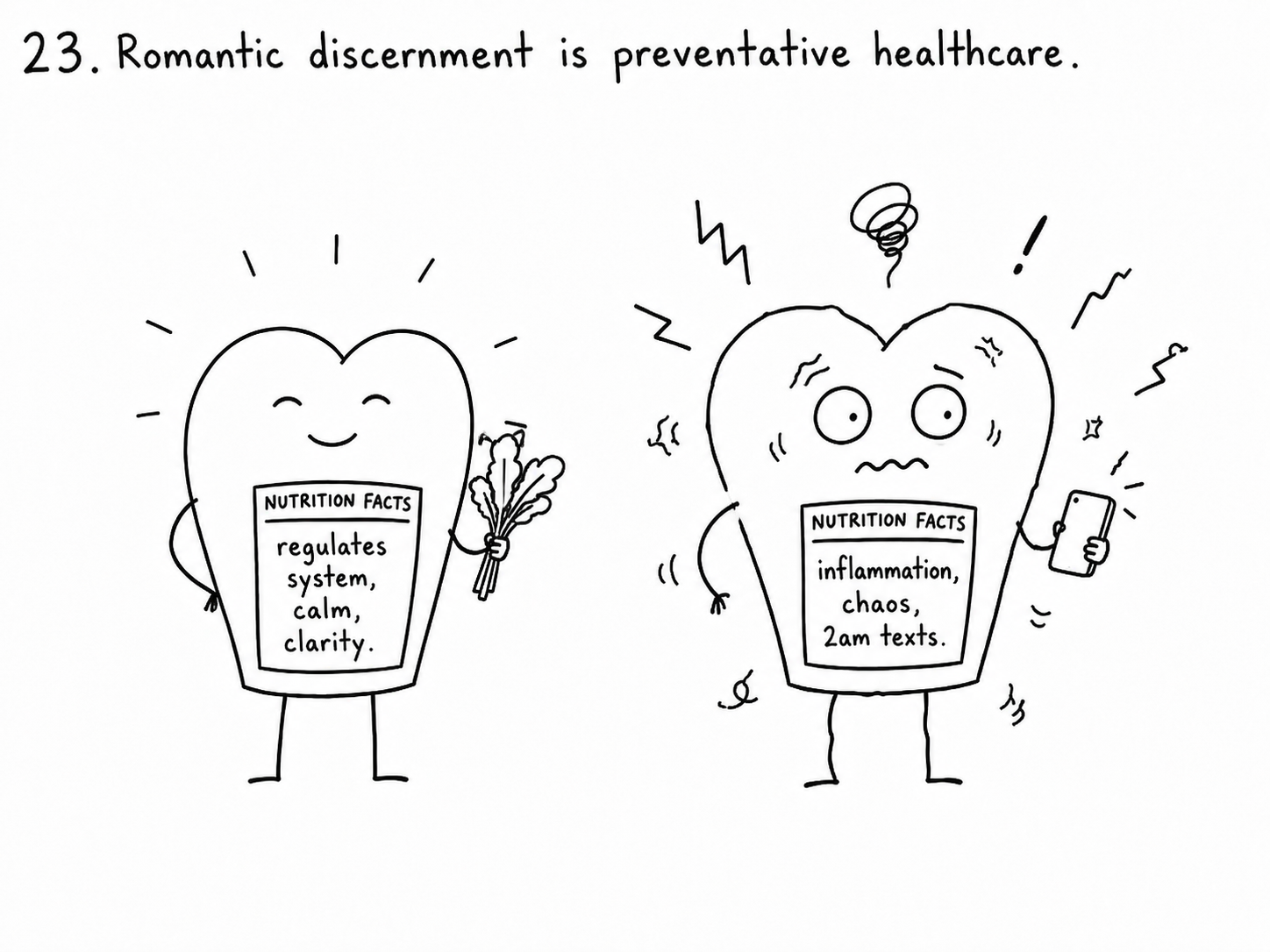
The right partner regulates the whole system. The wrong one inflames it.
Dating is not just chemistry. It is long-term emotional nutrition.
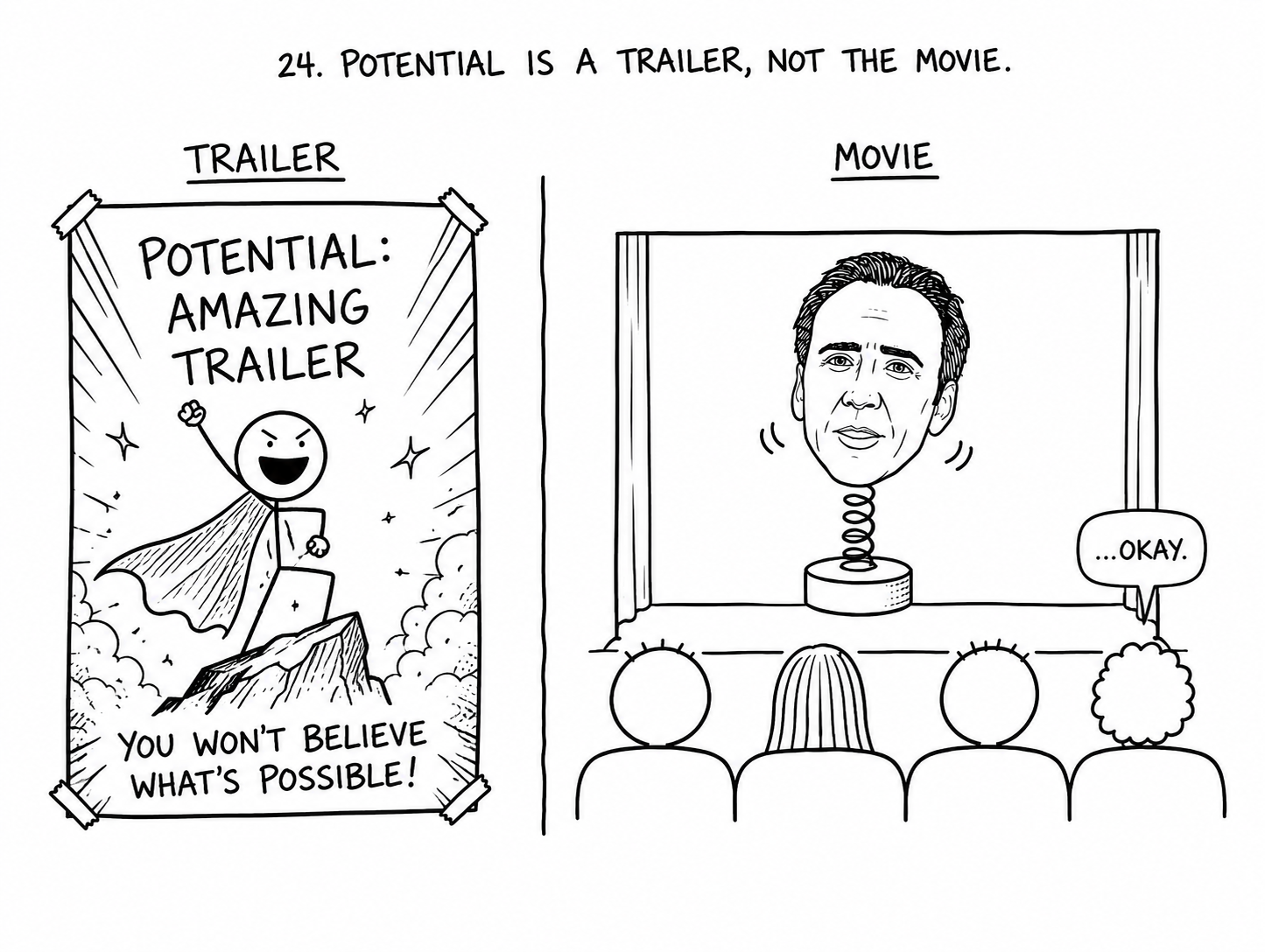
Potential can look incredible in previews.
Then the full thing starts and somehow the plot is bad, the pacing is weird, and Nicolas Cage (or Jared Leto) shows up.
Judge based on the meal, not what the menu says.
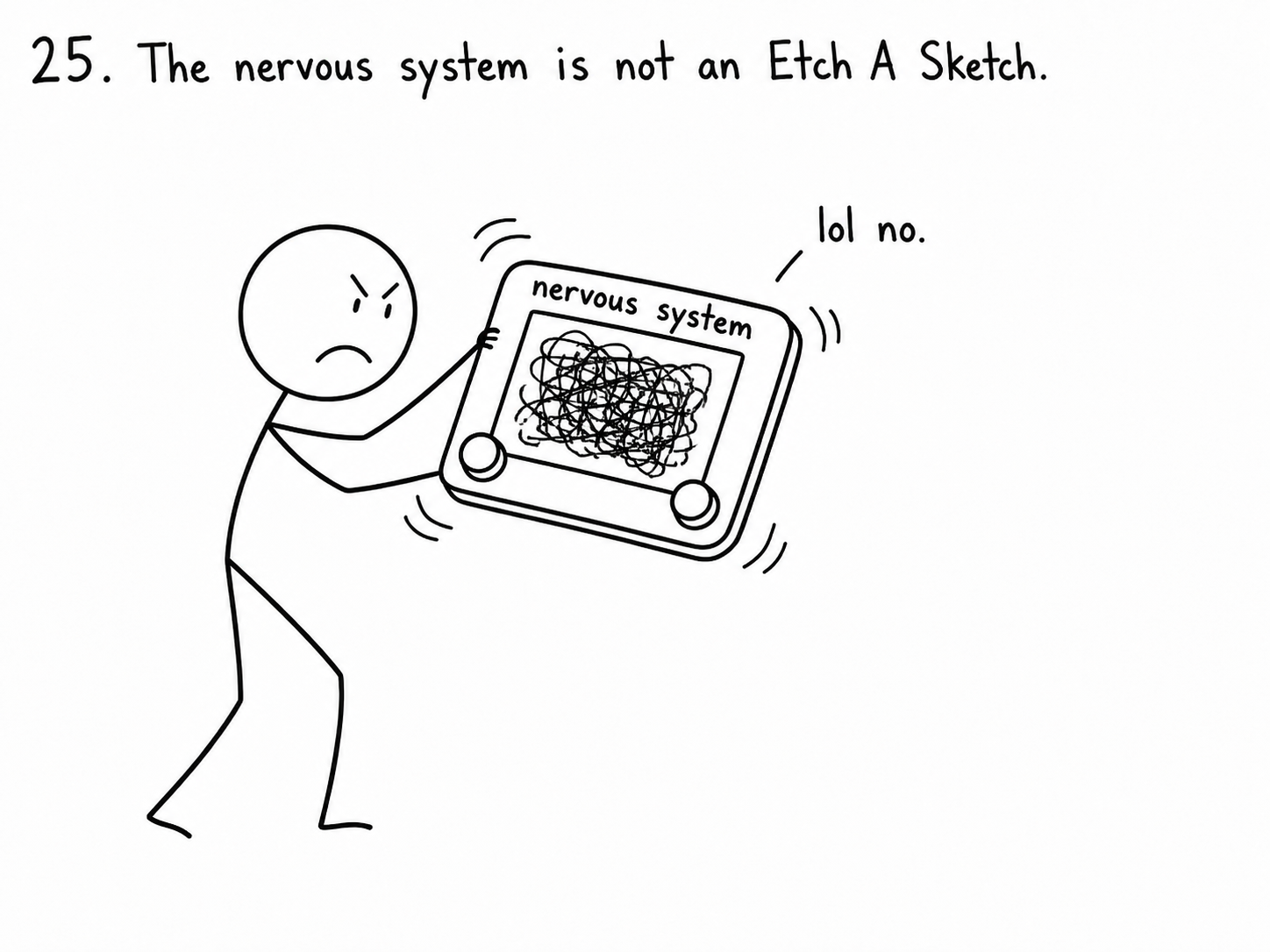
Emotional attachment to an ex-partner fades much slower than people like to admit: about halfway dissolved after 4.18 years on average, and fully faded around 8 years for the typical person.
Brutally unsexy stat. Humans do not just shake themselves clean and start over.
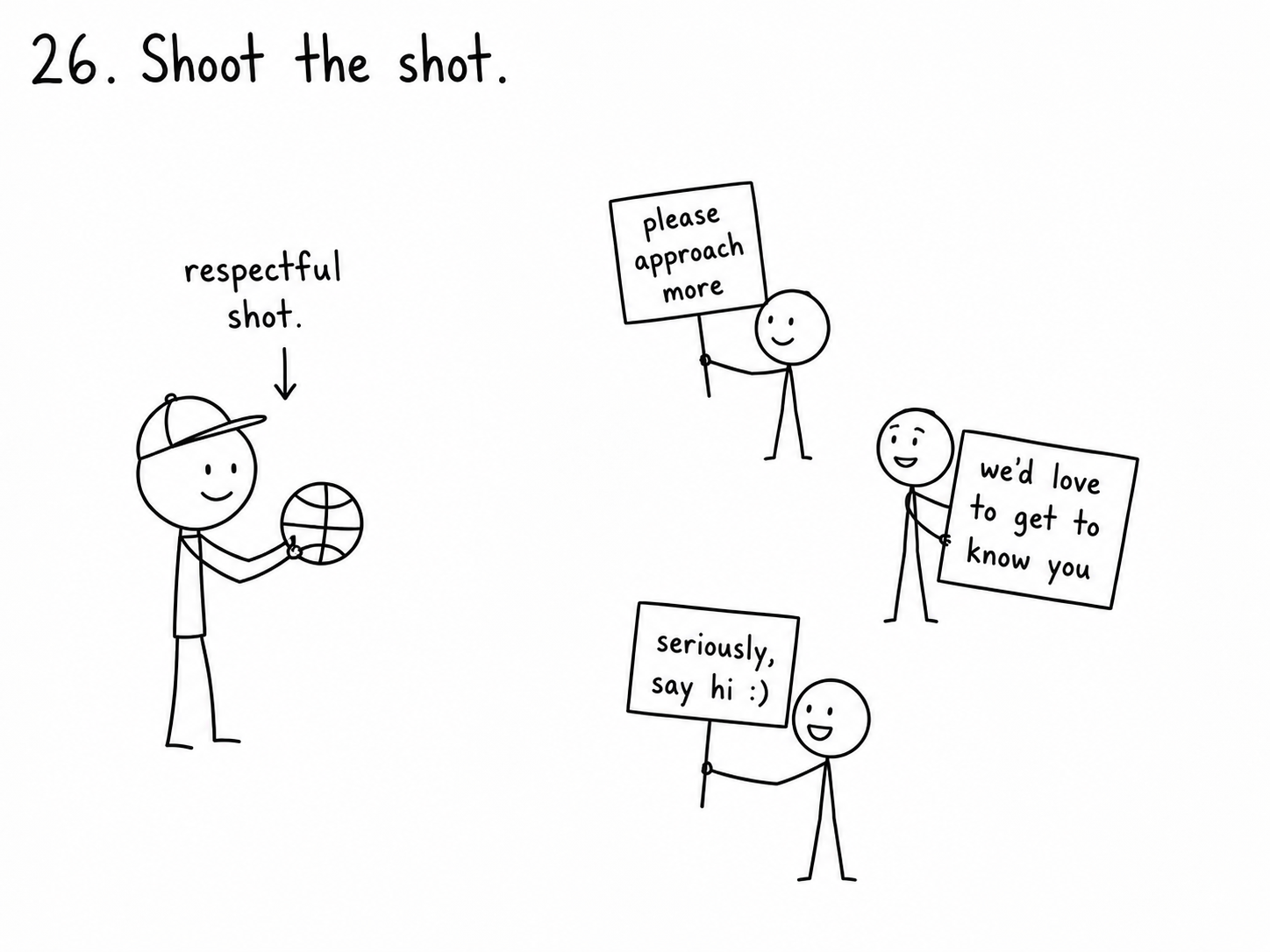
In one survey of 2,315 people, 92% of men said they wished they were approached more. Even among women, 69% said the same.
Respectfully shooting the shot seems less annoying than feared and more needed than assumed.
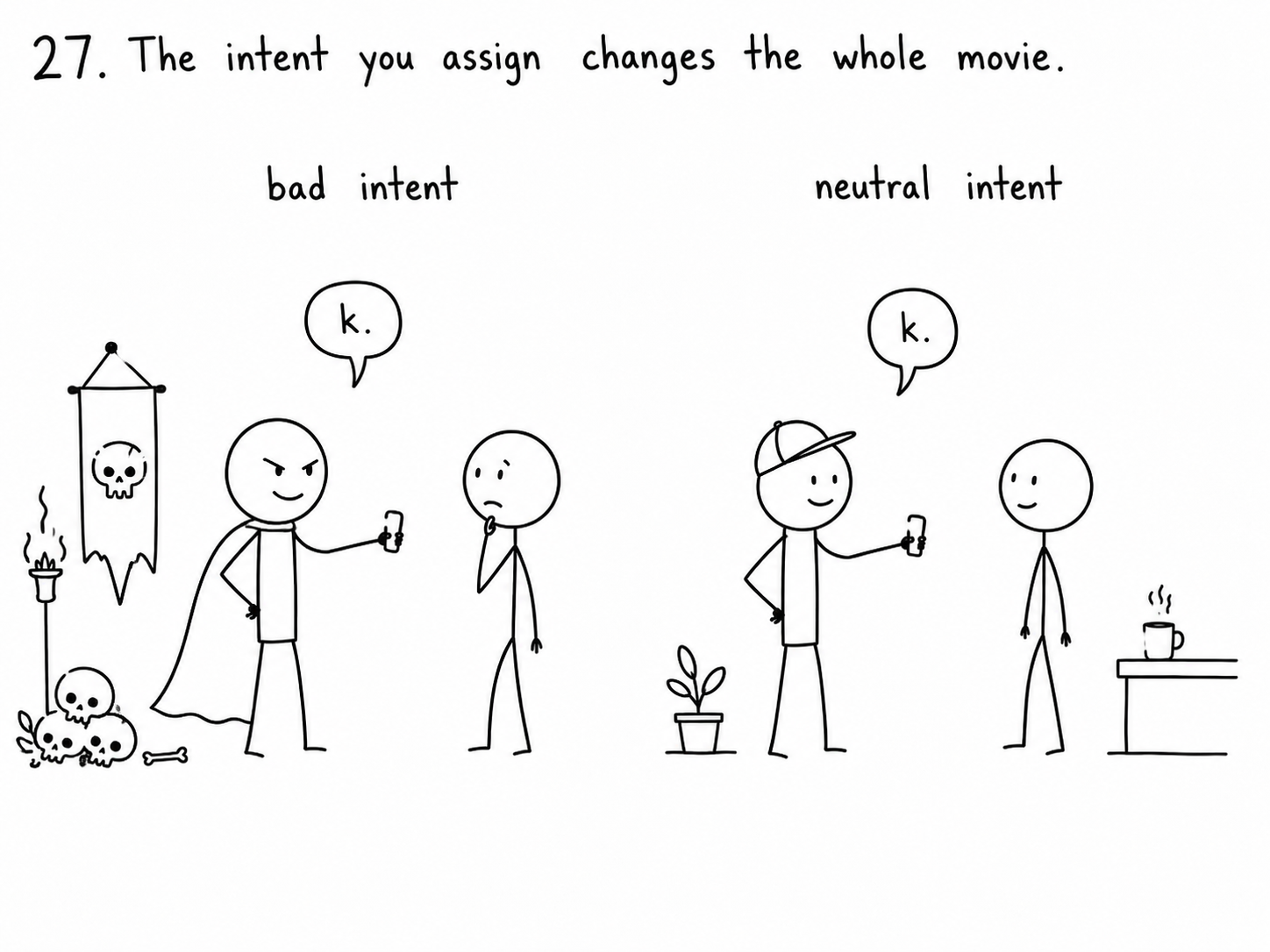
The same blunt comment, silence, or last-minute change feels totally different depending on the intent assigned to the person.
Before reacting, check whether the action is being seen clearly or the villain costume was already put on them.
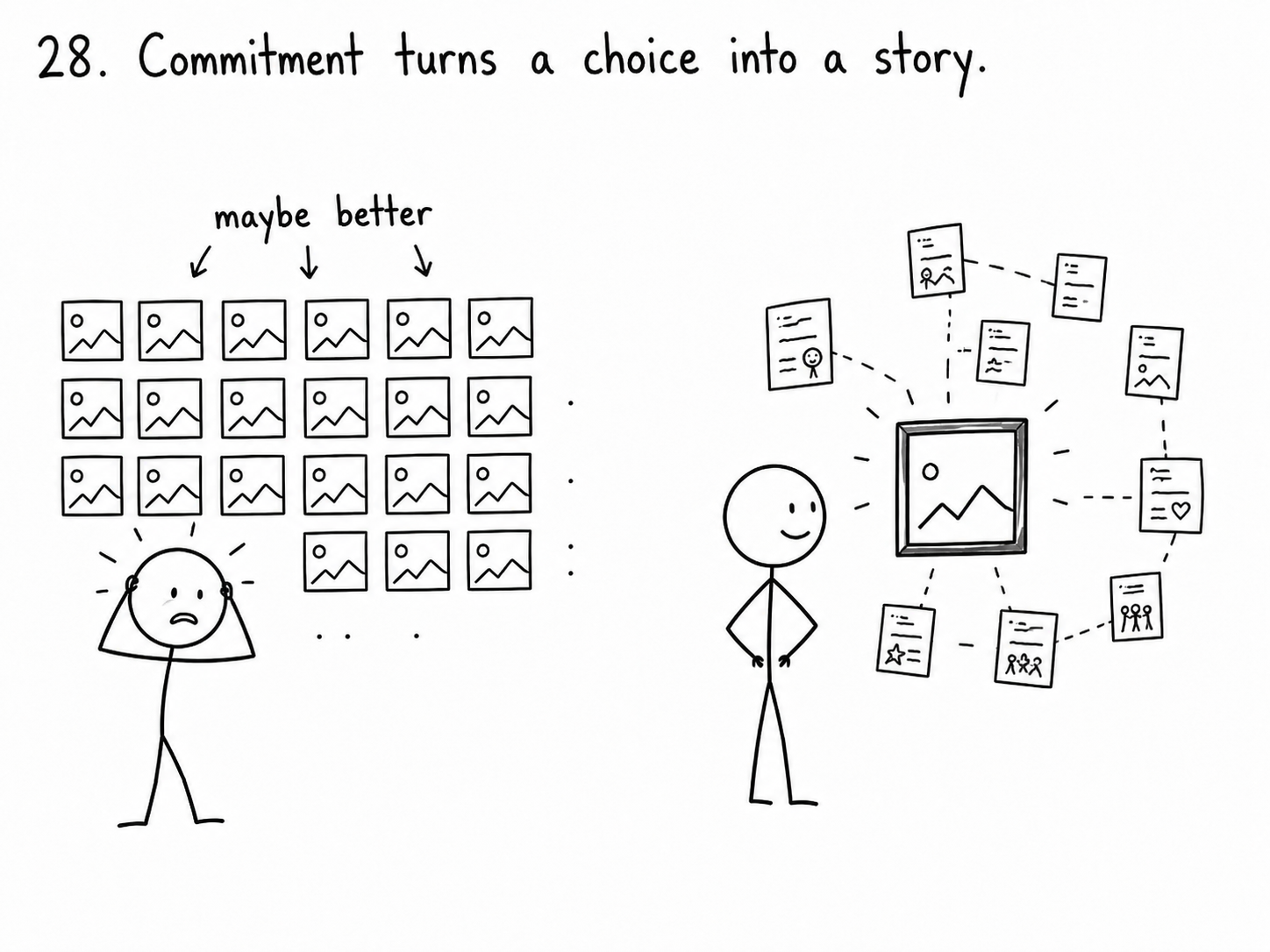
In a Harvard photography study, students who could not swap their chosen photo became happier with it than students who could change their minds. Keeping the eject button available sounds safe. It can also make the flight less enjoyable.
A reversible decision stays on trial. An irreversible one starts becoming a story. Some happiness only shows up after every alternative stops auditioning.
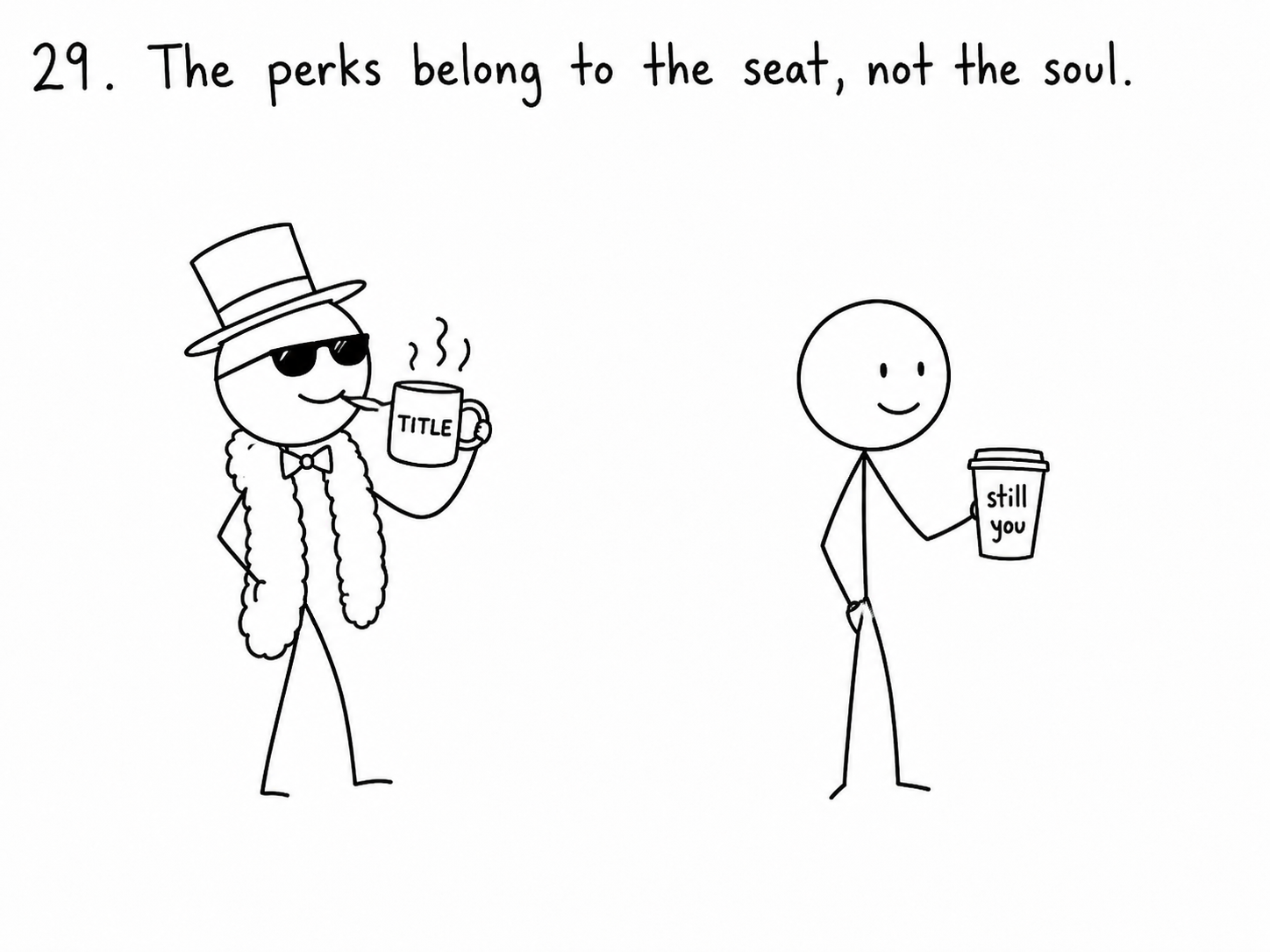
The Styrofoam Cup Theory is about remembering that fancy treatment often belongs to the role, not the person. One day it’s a porcelain mug because of the title. Another day it’s a Styrofoam cup because the title is gone.
Titles, upgrades, green rooms, press badges, VIP wristbands – fun, but rented.
Enjoy the cup. Don’t become the cup.
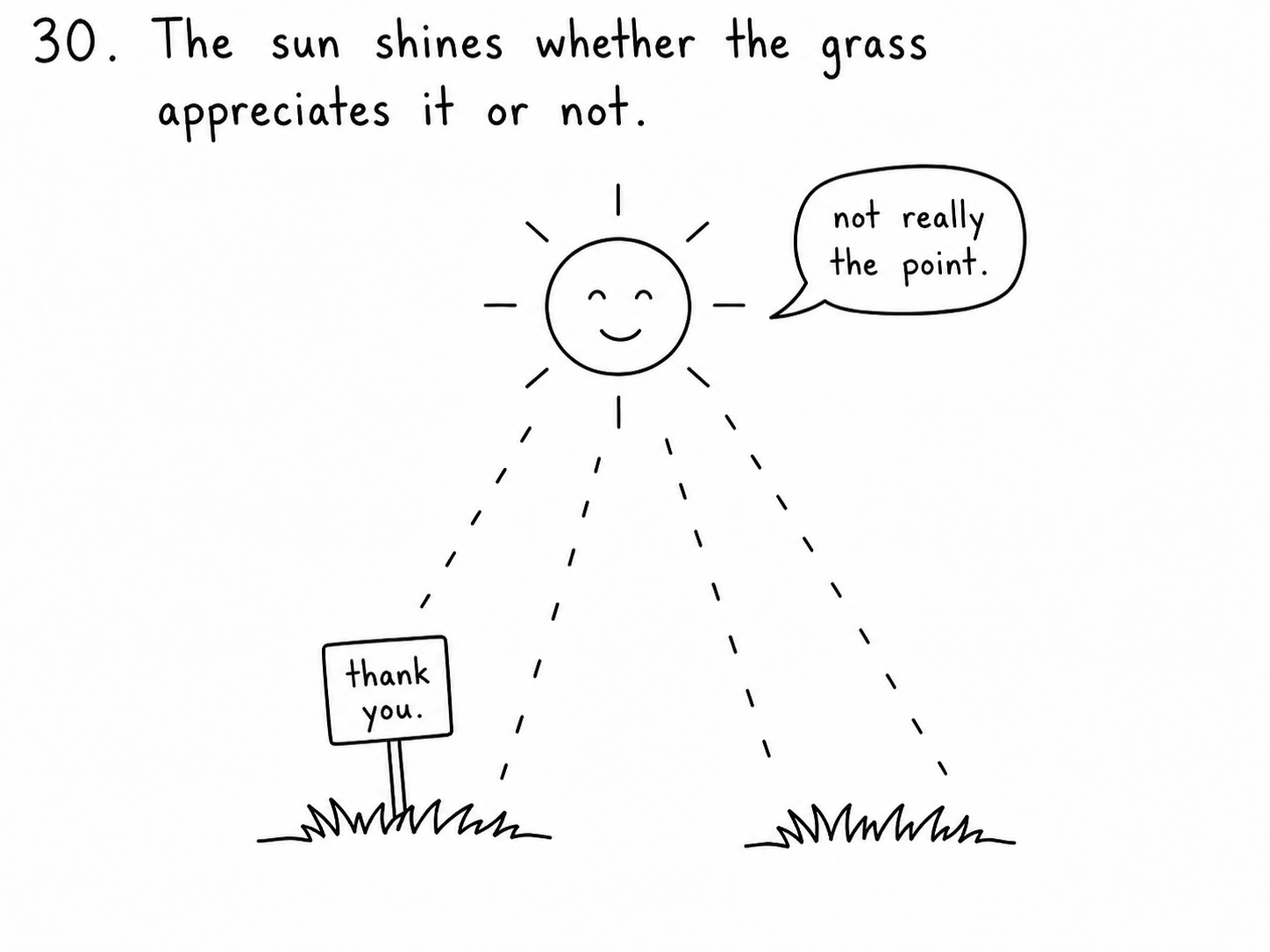
Never dim your light. Keep shining baby.
 Mitch's Blog